All About PRP Facial Benefits
August 18, 2026
Chemical Peels 101 and Everything You Need to Know Before Booking
August 22, 2026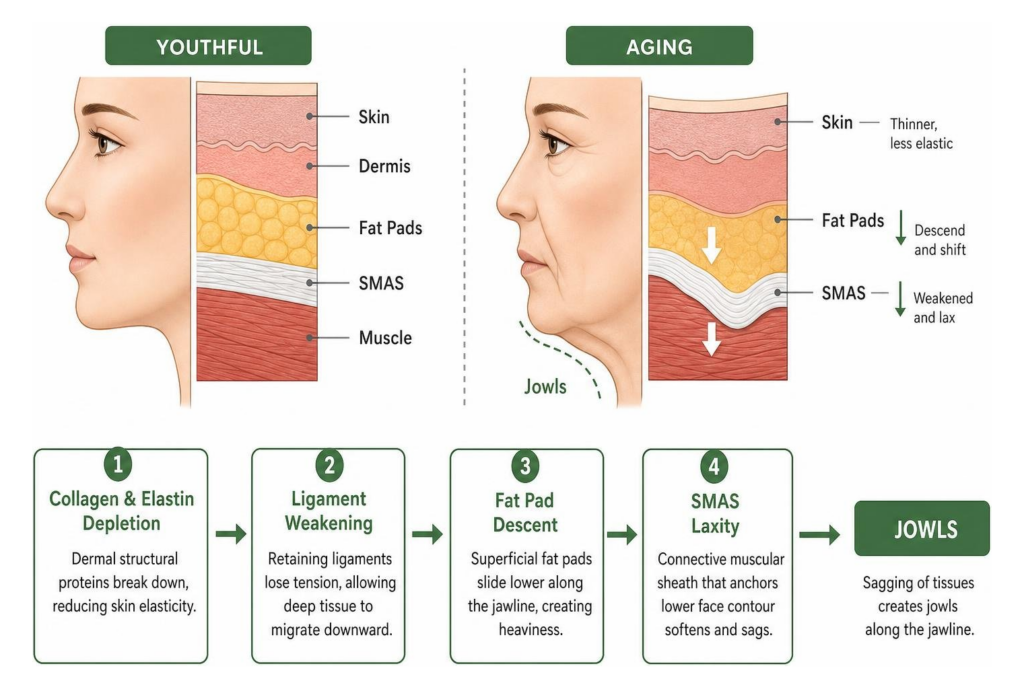
Everything You Need to Know About HIFU Skin Tightening
Anatomical Causes of Jowls and How Ultrasound Works
To understand what a hifu jowl lift can accomplish, it helps to take a close look at why jowls form in the first place. Jowling isn’t merely a problem of skin surface stretching; it is the visible end result of aging across multiple tissue layers in the lower face.
Underneath our skin, structural support is maintained by a framework consisting of the Superficial Musculoaponeurotic System (SMAS), deep retainers called mandibular ligaments, and discrete facial fat compartments. As time goes on, several structural shifts happen simultaneously:
- Collagen and Elastin Depletion: Dermal structural proteins break down, reducing skin elasticity.
- Ligament Weakening: Retaining ligaments lose tension, allowing deep tissue to migrate downward.
- Fat Descent: Superficial fat pads slide lower along the jawline, creating heaviness along the lower cheeks.
- SMAS Laxity: The connective muscular sheath that anchors lower face contour softens and sags.
High-Intensity Focused Ultrasound (HIFU) addresses this tissue laxity by delivering localized thermal energy far deeper than traditional lasers or superficial skin treatments. By targeting depth zones between 1.5 mm and 4.5 mm beneath the skin’s surface, ultrasound waves pass harmlessly through the outer dermal layers to reach the deep dermis and SMAS layer.
At these focal points, the device creates precise micro-thermal coagulation zones. The targeted localized heating (reaching temperatures around 60°C to 70°C) triggers an immediate thermal contraction of existing collagen fibers while stimulating a natural cellular repair process. Over the following months, this process—known as neocollagenesis—builds fresh structural collagen. For patients exploring options for lower face rejuvenation, modern ultrasound technology provides an effective non-surgical strategy. You can explore how ultrasound technology compares to other approaches in our guide on how to tighten sagging neck skin without surgery.
Scientific studies, such as a landmark Three-dimensional Analysis of Lifting Effects, demonstrate that non-invasive ultrasound energy can deliver measurable physical elevation of lower facial contours by acting directly on these deep structural layers.
Understanding Facial Aging and Structural Sagging
Facial aging moves in a downward and inward vector. In our youth, facial fat is evenly distributed across high cheek zones, providing a smooth, continuous jawline transition. As collagen production slows down past our late twenties, structural support diminishes.
The descent of superficial fat compartments over weakened mandibular retaining ligaments causes tissue to pool directly over the jawline bone. This pooling forms the distinct rounded protrusion known as a jowl. Because this laxity spans both skin elasticity loss and deep structural sagging, treating it effectively requires reaching deeper tissue layers without causing surface skin trauma.
How Targeted Energy Stimulates SMAS Layer Tightening
The SMAS layer is the exact anatomical structure plastic surgeons reposition during an invasive surgical facelift. HIFU is unique among non-invasive technologies because its 4.5 mm transducer cartridge reaches this exact deep tissue depth without requiring surgical incisions.
When 4.5 mm ultrasound waves focus directly within the SMAS, micro-injuries trigger immediate tissue shortening while stimulating long-term collagen building. Meanwhile, shallower transducers (such as 3.0 mm and 1.5 mm cartridges) target the deep and upper dermis to refine fine lines and improve overall skin density.
Expected Results and Millimeter Lift of a HIFU Jowl Lift
When considering a hifu jowl lift, establishing realistic clinical expectations is essential. Non-surgical energy devices tighten existing tissue via heat contraction—they do not excise excess skin or surgically alter facial muscle attachments.
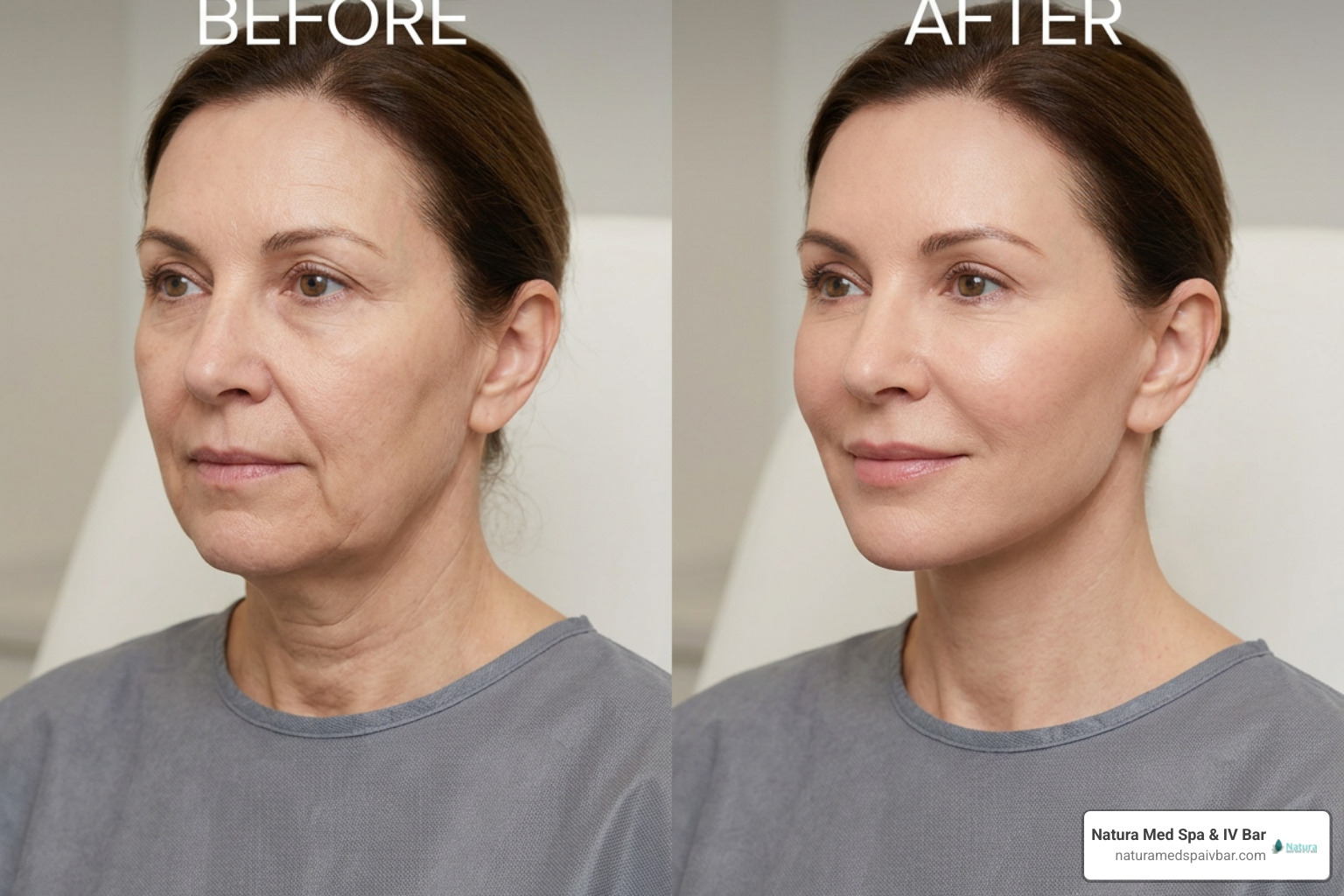
What does this mean in measurable terms? Advanced 3D facial imaging and clinical studies provide concrete data on what patients can expect:
- Jowl Elevation: Clinical 3D scanner analysis published in 2024 revealed an average lift of 2.90 mm in the jowl region following treatment.
- Jawline Definition: The same quantitative 3D evaluation measured an average 3.10 mm structural elevation along the mandible line.
- Neck Tightening: Deeper neck tissues demonstrated an average tissue elevation of up to 3.55 mm.
- Patient Satisfaction: Clinical study participants reported high satisfaction, rating their visual jowl improvement at 4.1 out of 5 on the Global Aesthetic Improvement Scale (GAIS).
Complementary clinical research on low-energy acoustic stimulation, detailed in Non-Invasive Midface Rejuvenation Research, confirms that ultrasound parameters can be customized based on individual soft-tissue volume and structural goals. To learn more about clinical treatments and aesthetic insights, visit our blog.
Candidate Selection for a HIFU Jowl Lift
HIFU produces its most impressive outcomes in carefully selected candidates. The ideal patient profile generally includes:
- Mild to Moderate Laxity: Individuals experiencing early jawline softening or mild jowl formation.
- Good Dermal Density: Patients who retain adequate subcutaneous skin thickness and moderate elasticity.
- Age Range: Typically individuals between 35 and 60 years old seeking non-surgical lower face maintenance.
- Realistic Goals: Patients wanting natural contour enhancement rather than dramatic surgical lifting.
For patients with severe skin redundancy, marked structural ligament detachment, or heavy lower face fat descent, non-surgical ultrasound alone may yield subtle results. In such instances, a surgical evaluation may be recommended.
Measurable Lifting and Longevity Timeline
The timeline for visible changes following a hifu jowl lift reflects the natural body process of tissue healing and collagen synthesis:
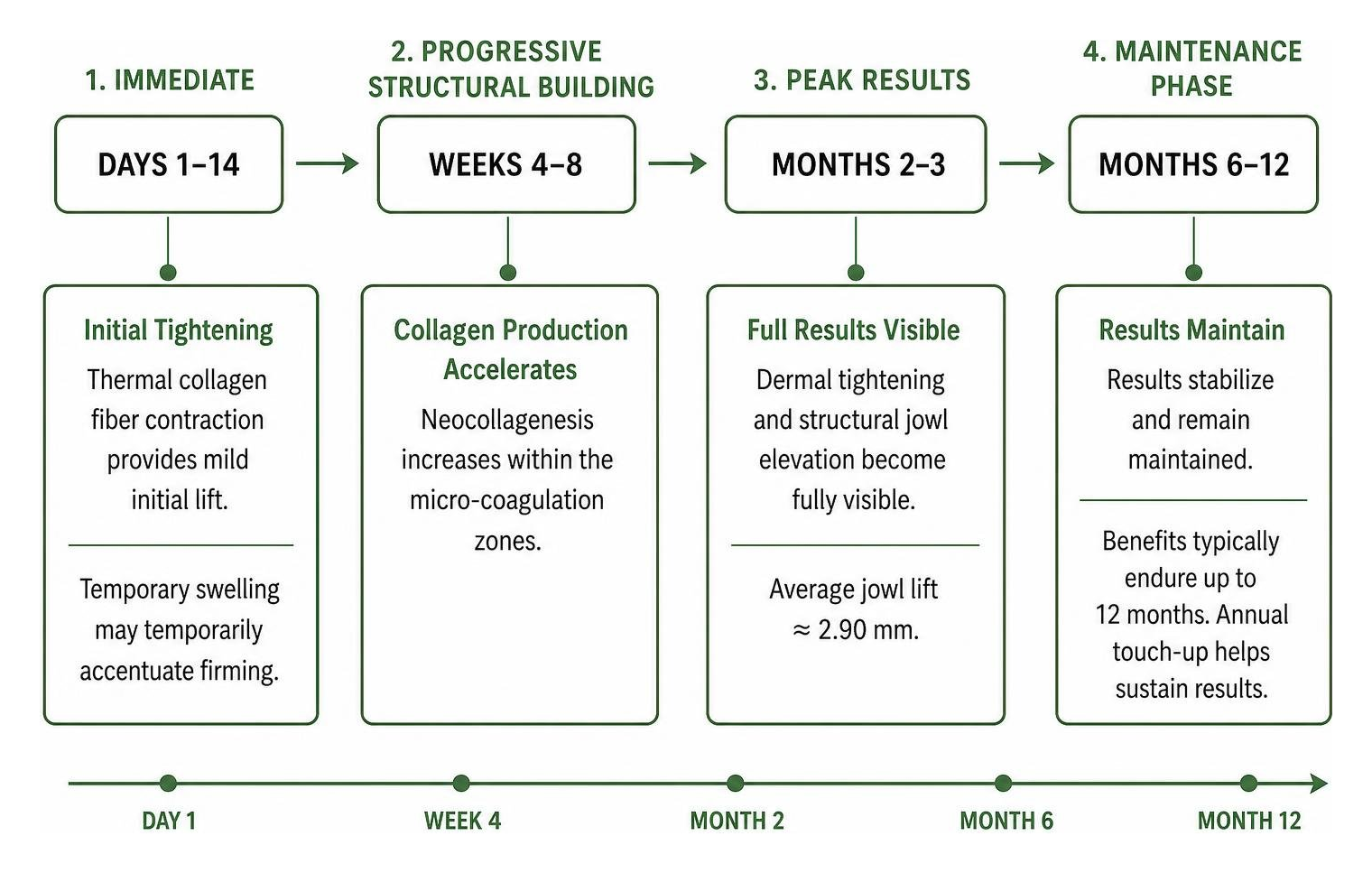
- Immediate (Days 1–14): Mild initial tightening due to thermal collagen fiber contraction. Some temporary post-treatment swelling may temporarily accentuate firming.
- Progressive Structural Building (Weeks 4–8): Fresh collagen formation (neocollagenesis) accelerates within the micro-coagulation zones.
- Peak Results (Months 2–3): Full dermal tightening and structural jowl elevation (averaging ~2.90 mm) become fully visible as new collagen networks mature.
- Maintenance Phase (Months 6–12): Results stabilize and remain maintained. Depending on skin aging rates and home care routines, benefits typically endure for up to 12 months, after which an annual touch-up session helps sustain structural support.
Ideal Candidates, Safety Profile, and Potential Side Effects
Safety is a primary consideration when evaluating any aesthetic procedure. HIFU has built an established track record for safety across all skin phototypes (Fitzpatrick I–VI) because ultrasound energy bypasses melanin in the surface skin layer entirely.
Key safety findings from a 2015 Clinical Study on Ultrasound Efficacy highlighted that the jawline and cheek regions demonstrate some of the highest aesthetic response rates with minimal side effects. Explore our comprehensive selection of advanced non-invasive procedures on our med spa services page.
Skin Density and Age Suitability
Tissue thickness plays an important role in how high-energy ultrasound behaves within lower face structures:
- Thicker Soft Tissue: Patients with moderate facial fat volume in the mid-cheek and lower face allow providers to safely deliver higher ultrasound energy settings (e.g., 0.6 J to 0.7 J), achieving robust thermal contraction.
- Thin or Thinning Skin: For slimmer faces or mature skin with reduced tissue volume, energy settings are lowered (0.4 J to 0.5 J) or focused at shallower transducer depths (1.5 mm and 3.0 mm) to avoid unwanted subcutaneous fat loss.
Common Side Effects and Risk Mitigation
While HIFU is non-invasive and requires no downtime, temporary reactions can occur. Clinical data indicates side effects are generally mild and self-limiting:
- Erythema (Redness): Reported in approximately 30% of patients; typically resolves within a few hours to 2 days post-treatment.
- Mild Edema (Swelling): Occurs in roughly 30% of treated cases, stabilizing skin firmness while resolving naturally within 3 to 7 days.
- Purpura or Bruising: Observed in about 10% of patients; localized and clears within 7 to 14 days.
- Nerve Sensitivity or Tenderness: Transient tingling or tenderness along the jawbone can happen if energy passes near superficial nerve pathways (such as the marginal mandibular nerve branch).
Comparing Non-Surgical Jowl Solutions to Facelifts and Fillers
Choosing the right jowl correction method requires comparing non-surgical ultrasound against surgical surgery and alternative aesthetic injectables.
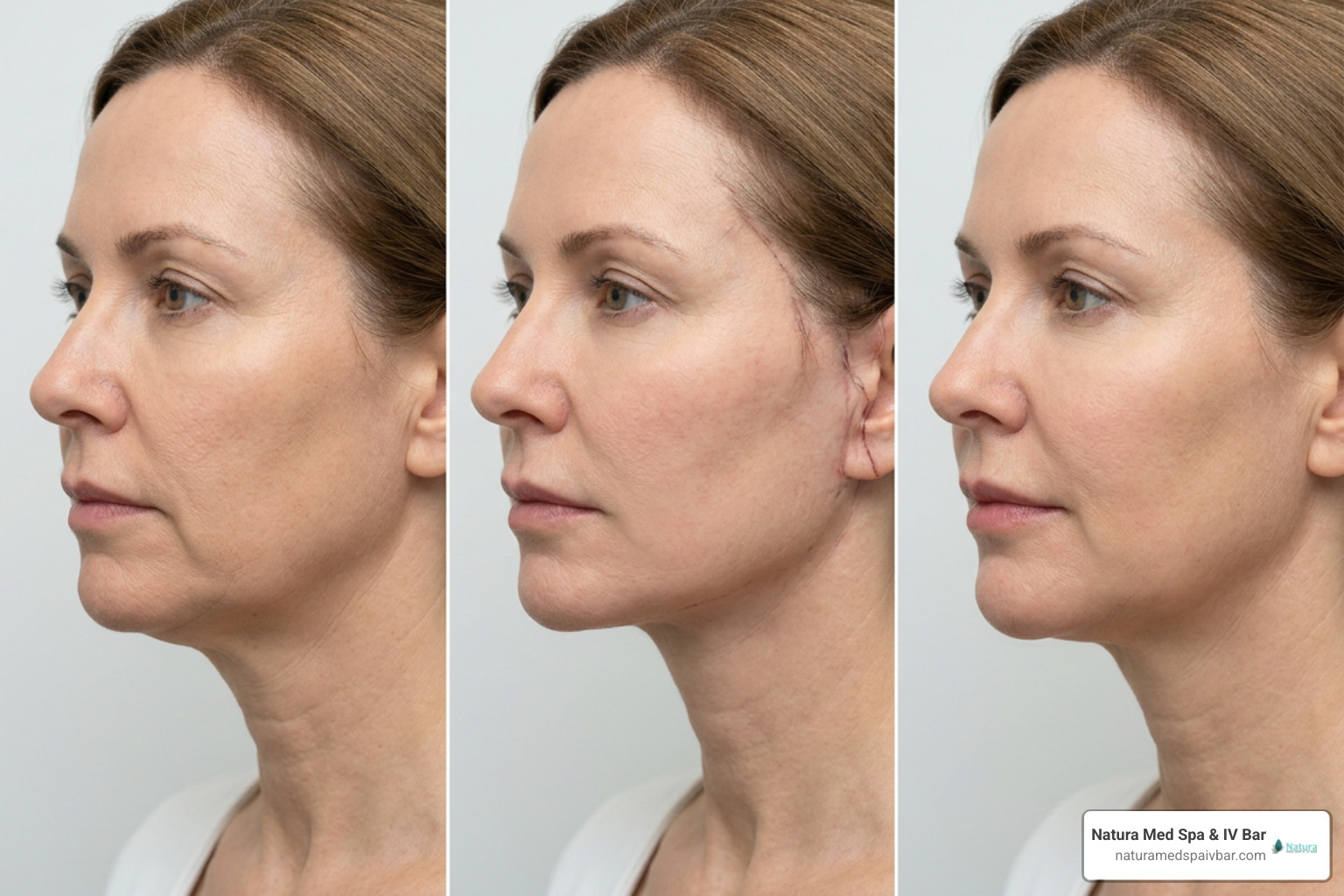
If you are evaluating different non-invasive options, review our complete guide to compare skin tightening options a comprehensive guide.
HIFU vs Surgical Facelift: Surgical Elevation vs Non-Invasive Contracting
A traditional surgical facelift remains the gold standard for severe lower face aging. However, the differences in approach, recovery, and outcomes are distinct:
| Feature / Goal | HIFU Jowl Lift | Surgical Lower Facelift |
|---|---|---|
| Primary Action | Deep thermal contraction & collagen growth | Surgical excision of loose skin & SMAS surgical relocation |
| Typical Lift Height | ~2.90 mm to 3.10 mm | 10 mm to 20+ mm direct surgical elevation |
| Anesthesia | None or topical numbing cream | General anesthesia or twilight sedation |
| Invasiveness | 100% non-invasive (no skin breaks) | Surgical incisions around ear contours |
| Downtime | Zero days (immediate activity return) | 10 to 14+ days social downtime & healing |
| Ideal For | Mild to moderate jawline laxity (ages 35–60) | Moderate to severe tissue sagging & redundant skin |
HIFU vs Dermal Fillers and Radiofrequency Treatments
Patients often wonder whether dermal fillers or alternative energy devices are better suited for lower facial sagging. The answer depends on your primary aesthetic structural need:
- Dermal Fillers: Injectable hyaluronic acid or biostimulatory fillers do not contract loose skin. Instead, they camouflage jowls by filling the hollow notch directly in front of the jowl (the pre-jowl sulcus) or restoring lost volume in the chin and upper cheek. Explore modalities on our injectables page.
- Radiofrequency (RF) Microneedling: Uses tiny needle arrays to deliver heat into the mid-dermis. RF microneedling excels at refining superficial skin texture, crepiness, and fine lines. However, HIFU reaches deeper tissue depths (4.5 mm SMAS depth) to produce greater upward lifting traction.
- Cold Plasma Skin Tightening: Targets surface epidermal contraction and fine textural repair. Learn how cold plasma works in our guide on the ultimate guide to cold plasma skin tightening.
Recovery, Aftercare, and Procedure Costs
One of the main benefits of a hifu jowl lift is its simple post-treatment recovery. Because ultrasound energy bypasses the outer skin layer entirely, there are no open wounds, peeling, or mandatory hiding periods.
To support collagen synthesis and skin healing after treatment, consider pairing your regimen with restorative therapies. Read more about regenerative options in the ultimate guide to blood plasma injections for facial rejuvenation.
Post-Treatment Recovery Protocol and Aftercare Tips
Following a straightforward home-care protocol helps maximize your visual outcome while preventing temporary irritation:
- Daily Sun Protection: Apply a broad-spectrum sunscreen with at least SPF 30 daily to protect regenerating dermal collagen from UV breakdown.
- Gentle Cleansing: Wash the treated jawline and neck using lukewarm water and a mild, non-abrasive cleanser for the first 48 hours.
- Hydration Support: Drink plenty of water and apply hydrators rich in hyaluronic acid, ceramides, or growth factors to support cellular repair.
- Avoid Excessive Heat: Skip saunas, hot tubs, steam rooms, and intense cardiovascular exercise for 48 hours to minimize temporary facial swelling.
- Avoid Direct Pressure: Refrain from aggressive facial massages or deep tissue work around the jawline for at least 2 to 3 weeks.
Cost Factors and Value Assessment of a HIFU Jowl Lift
The financial commitment for ultrasound facial tightening varies depending on your treatment scope, location, and provider experience:
- Average National Cost Range: In 2025/2026 reviews, full non-surgical ultrasound skin-tightening treatments generally range between $2,000 and $4,000, with targeted lower-face or jowl treatments sitting at the lower end of that scale.
- RealSelf Worth It Rating: Non-surgical facelift procedures maintain a strong 83% Worth It score, reflecting high patient satisfaction regarding non-surgical convenience and natural-looking tightening.
- Value Considerations: When weighing costs against surgery, HIFU avoids operating room fees, facility charges, and downtime-related lost work days.
At Natura Med Spa & IV Bar—serving our client communities in Aurora CO, Denver CO, and Cherry Creek CO—we emphasize personalized treatment evaluations so you receive clear advice on expected value and visible outcomes.
Frequently Asked Questions About Ultrasound Skin Tightening
How many millimeters of lift can HIFU achieve on the jowls?
Quantitative 3D scanner studies demonstrate an average physical lift of 2.90 mm directly in the jowl region and 3.10 mm along the jawline contour. While this millimeter shift creates a visibly crisper lower face, it is designed for natural firming rather than surgical-level tissue elevation.
Is HIFU painful and does it require anesthesia?
HIFU is generally well-tolerated without general anesthesia. Patients typically describe brief sparks of deep heat or tiny tingling sensations along the jawline as ultrasound energy reaches the SMAS layer. Applying a topical numbing cream prior to your session keeps discomfort low and manageable.
How often should you repeat HIFU treatments for jowls?
Because collagen rebuilding peaks at 2 to 3 months and maintains its structure over 12 months, most patients schedule a single primary treatment session followed by an annual maintenance treatment once every 12 months to preserve structural skin firming.
Conclusion
A hifu jowl lift offers an effective non-surgical treatment for early to moderate jawline laxity, sagging jowls, and tissue softening in the lower face. By delivering precise ultrasound energy down to the 4.5 mm SMAS layer, HIFU stimulates real collagen remodeling that produces an average 2.90 mm lift in the jowl region with zero downtime.
While ultrasound skin tightening cannot replace a surgical facelift for severe tissue sagging, its high patient satisfaction rate, minimal recovery requirements, and proven safety profile make it an ideal choice for maintaining natural lower face contours.
Are you ready to discover how ultrasound skin tightening can restore definition to your jawline? Visit our team at Natura Med Spa & IV Bar across our Denver CO, Cherry Creek CO, and Aurora CO clinic locations. Schedule your individual consultation today by visiting our non-surgical skin tightening service page!