How to Tighten Sagging Neck Skin Without Surgery
August 12, 2026
All About PRP Facial Benefits
August 18, 2026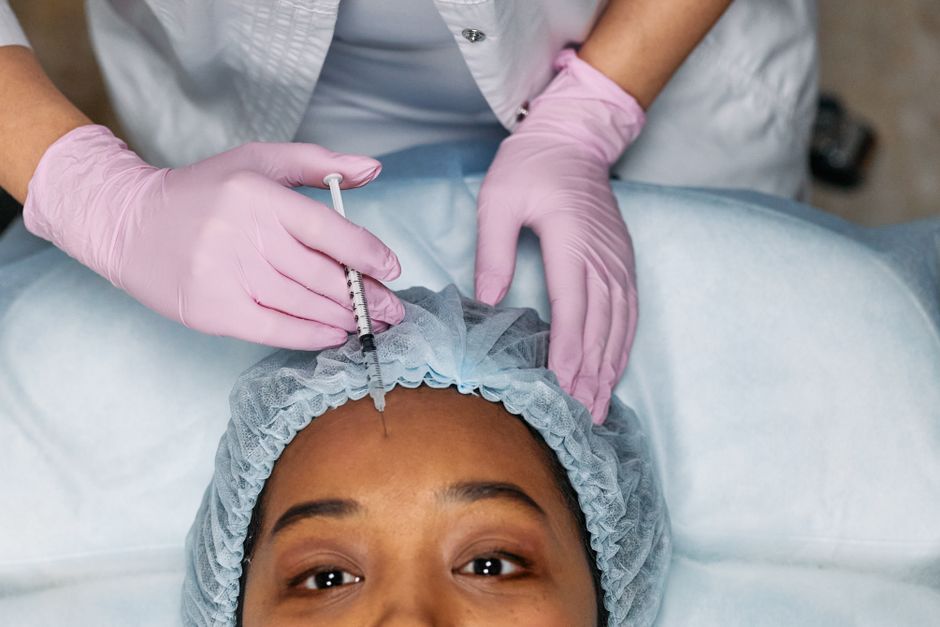
The Ultimate Guide to Dysport Injections
Understanding Dysport Injections: Mechanism and Indications
When you make everyday facial expressions—like squinting at a bright Colorado sun or concentrating hard on your screen—your brain sends electrical signals down nerve pathways to your facial muscles. These signals release a chemical messenger called acetylcholine. When acetylcholine binds to muscle receptors, the muscle contracts. Over time, these repeated contractions cause the overlying skin to crease, leading to dynamic frown lines.
This is where dysport injections come into play. Dysport contains abobotulinumtoxinA, a specialized neuromuscular blocking agent derived from botulinum toxin type A. Its primary mechanism of action is acetylcholine inhibition. By temporarily stopping the release of acetylcholine at the neuromuscular junction, Dysport prevents targeted muscle groups from over-contracting. As the underlying muscle relaxes, the skin above it smooths out, giving you a refreshed, naturally relaxed appearance.

First approved by the U.S. Food and Drug Administration (FDA) in April 2009, Dysport is backed by rigorous clinical testing for safety and efficacy. The formulation includes active abobotulinumtoxinA along with inactive ingredients such as human albumin (a blood protein component that stabilizes the formulation) and lactose. Because of its precise manufacturing process, patients get reliable, reproducible results when treated by trained professionals. For full clinical specifics, you can review the official DailyMed Dysport Prescribing Information.
How Dysport Injections Smooth Glabellar Lines
Glabellar lines—commonly called “elevens” or frown lines—are the vertical creases that form between your eyebrows. They are primarily caused by the repeated pulling of two key muscle groups: the corrugator muscles (which pull your brows inward and down) and the procerus muscle (which pulls the skin between your brows downward).
During a cosmetic procedure, dysport injections target these specific muscles to soften active expression lines. The standard recommended cosmetic dose for smoothing moderate to severe glabellar lines is 50 Units, split across five precise anatomical points. One of the standout qualities of Dysport is its rapid onset speed. Many patients across Denver and Cherry Creek notice initial smoothing within just 2 to 3 days post-treatment, with full aesthetic results locking in around Day 30. If you want to explore our complete menu of anti-aging treatments, explore aesthetic injectables offered at our med spas.
Medical Conditions Treated with Dysport Injections
While Dysport is famous for softening frown lines, its therapeutic applications are equally impressive. FDA-approved medical indications include:
- Cervical Dystonia: A painful neurological disorder causing involuntary neck muscle contractions, forcing the head into abnormal twists or tilts. Clinical trials show that 500 Units of Dysport significantly reduces neck muscle spasms and pain, though temporary muscular weakness occurred in 16% of trial participants (versus 4% on placebo) and dysphagia (difficulty swallowing) in 15% (versus 4% on placebo).
- Adult Upper & Lower Limb Spasticity: Muscle stiffness and involuntary flexure resulting from stroke, brain injury, or neurological conditions. In upper limb spasticity studies, 1000 Units of Dysport helped reduce muscle tone, with muscular weakness reported in 4% of patients (compared to 1% on placebo).
- Pediatric Limb Spasticity: Approved for children 2 years of age and older dealing with upper or lower limb spasticity (such as dynamic equinus foot deformity from cerebral palsy). In pediatric upper limb trials, a dose of 16 Units/kg resulted in muscle weakness in 6% of patients, compared to 1% in low-dose control groups.
Dysport vs. Other Neuromodulators
Choosing the right anti-wrinkle injectable can feel overwhelming with options like Dysport, Botox, and Xeomin available. While all three belong to the neurotoxin family, subtle differences in active formulation, protein structures, and clinical behavior set them apart.
| Feature / Metric | Dysport (AbobotulinumtoxinA) | Botox (OnabotulinumtoxinA) | Xeomin (IncobotulinumtoxinA) |
|---|---|---|---|
| Primary FDA Cosmetic Area | Glabellar lines | Glabellar lines, Forehead, Crow’s feet | Glabellar lines |
| Initial Onset Time | 2 to 3 days | 7 to 30 days | 3 to 7 days |
| Average Results Longevity | Up to 5 months | 3 to 6 months | 3 to 4 months |
| Dosing Ratio (vs Botox) | ~2.5:1 to 3:1 (50 Units Dysport = ~20 Units Botox) | 1:1 baseline standard | 1:1 ratio with Botox |
| Formulation Structure | Complexing proteins + human albumin + lactose | Complexing accessory proteins + human albumin | “Naked” toxin (no accessory complexing proteins) |
| Diffusion Spread | Slightly wider feathering spread | Controlled, concentrated local point | Moderate localized precision |
| Average Cost per Session | ~$400 | $300 – $600 | $300 – $500 |
Dysport versus Botox Comparison
When comparing dysport injections directly to Botox, several functional distinctions emerge:
- Onset & Diffusion: Dysport typically kicks in faster (2-3 days vs. up to a week or more for Botox). Because Dysport has a slightly broader diffusion spread, it feathers out smoothly across broader muscle zones like the brow, offering a very soft, natural look.
- Duration: In clinical trials for glabellar lines, 55% to 60% of Dysport patients maintained significant improvement (at least a 2-grade improvement) at Day 30, with full longevity stretching up to 5 months.
- Unit Potency & Dosing Ratio: Dysport potency units are specific to its proprietary assay. They are non-interchangeable with Botox units. Generally, it takes roughly 2.5 to 3 Dysport units to equal the muscle-relaxing strength of 1 Botox unit (e.g., 50 Units of Dysport equals roughly 20 Units of Botox for frown lines).
- Cost: The average cost per Dysport session for glabellar lines sits right around $400, making it an exceptional value for longevity and fast results.
To understand more about neurotoxin binding at a cellular level, dive into our article on neuromodulator science, or read our full Botox overview for a head-to-head comparison.
Comparing Dysport with Xeomin
Xeomin is often dubbed the “naked neurotoxin” because its manufacturing process strips away all complexing accessory proteins, leaving only the purified botulinum toxin molecule. In contrast, Dysport retains protective complexing proteins alongside human albumin and lactose.
While Xeomin’s lack of accessory proteins reduces the theoretical risk of developing neutralizing antibodies, Dysport’s specific protein structure contributes to its swift onset and wider feathering effect. This gentle spread makes Dysport particularly appealing for patients wanting to soften broad expression lines without a stiff or frozen appearance. To explore whether a stripped formulation fits your needs, check out our Xeomin treatment details.
Dosing, Administration, and Results Longevity

Getting optimal results from dysport injections requires artful aesthetic evaluation combined with strict pharmacological precision. Dysport comes as a dry, freeze-dried powder in single-use vials (300 Units or 500 Units) that must be reconstituted with sterile, preservative-free 0.9% Sodium Chloride Injection, USP before clinical use.
injectors gently swirl the saline into the powder without aggressive shaking to preserve the delicate protein structure. Depending on clinical preference, reconstitution uses 1.5 mL or 2.5 mL of saline, yielding precise unit concentrations per volume drawn. Reconstituted vials must be refrigerated between 2°C to 8°C (36°F to 46°F) and administered within 24 hours. Medical practitioners can reference the official Dysport Reconstitution Guide for complete dilution workflows.
Administering the Standard 50-Unit Dose
For aesthetic treatment of moderate to severe glabellar lines, the standard FDA-approved dosing protocol is 50 Units total, administered across five specific intramuscular sites:
- Two injections into each corrugator muscle (four sites total, 10 Units per site).
- One injection into the central procerus muscle (10 Units).
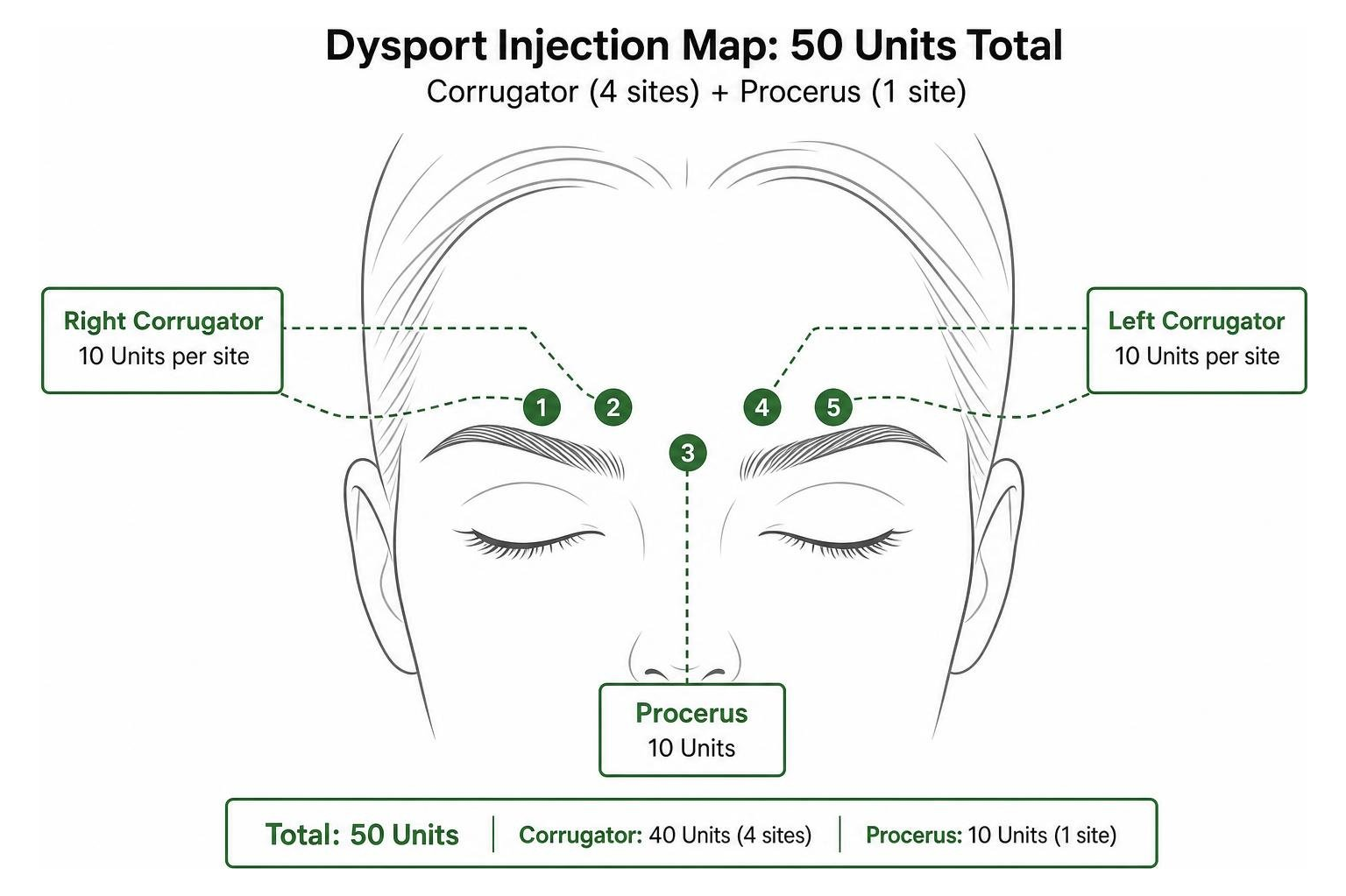
To prevent unwanted migration of the toxin into the upper eyelid muscle (the levator palpebrae superioris), injectors place medial corrugator injections at least 1 centimeter above the bony supraorbital ridge. Maintaining gentle pressure along the orbital rim during injection further safeguards against temporary eyelid drooping (ptosis).
How Long Results Last and Recovery Aftercare
One of the best things about dysport injections is that there is virtually zero downtime. Most appointments take under 20 minutes, allowing patients in Aurora, Denver, and Cherry Creek to return to their normal daily routine right away.
To get the absolute best results and prevent product displacement, follow these key post-care guidelines:
- Keep your head elevated and upright for at least 4 hours after treatment.
- Avoid touching, rubbing, or massaging the treated brow area for 24 hours.
- Skip strenuous physical workouts, saunas, and intense heat exposure for 24 to 48 hours.
- Avoid heavy alcohol intake and blood-thinning supplements (like fish oil or high-dose vitamin E) immediately post-treatment to reduce bruising risk.
Results last up to 5 months for aesthetic frown lines. Because nerve endings gradually recover their ability to release acetylcholine over time, maintenance sessions should be scheduled every 3 to 4 months (minimum re-treatment interval is 12 weeks). For more detailed post-care advice, read our guide on post-injection recovery tips.
Safety, Contraindications, and Toxin Spread Risk

When administered by certified medical practitioners, dysport injections have an outstanding clinical safety record. However, as an FDA-regulated drug, it carries essential safety warnings that every patient must understand before treatment.
While distant toxin spread is rare in cosmetic treatments (where low 50-Unit doses are used), it carries higher relevance in large-dose therapeutic applications for spasticity or dystonia. Seek immediate emergency medical attention if you notice unexpected muscle weakness, voice hoarseness, or trouble breathing or swallowing after treatment. Review the Official Dysport Medication Guide for comprehensive consumer safety parameters.
Common Side Effects and Injection Site Reactions
Most cosmetic side effects are mild, temporary, and localized to the injection points. In aesthetic clinical trials for frown lines, reported side effects included:
- Nasopharyngitis (sore throat / nasal irritation): Occurred in 10% of Dysport patients vs. 4% on placebo.
- Headache: Temporary mild tension head tightness following brow muscle relaxation.
- Injection Site Reactions: Minor swelling, redness, or localized pinpoint bruising.
- Eyelid Ptosis (drooping): Reported in roughly 1-2% of cases, usually resolving as the toxin settles over a few weeks.
- Dry Eye: Temporary eye irritation or reduced tear production; consult an eye specialist if dry eye symptoms persist.
Key Contraindications and Patient Eligibility
To ensure patient safety, dysport injections are strictly contraindicated for individuals with:
- Known Allergy to Cow’s Milk Protein: Dysport formulation contains trace cow’s milk protein from its lactose excipient. If you have a true milk allergy, Dysport is contra-indicated (Botox or Xeomin are great alternatives).
- Hypersensitivity to Botulinum Toxin: Prior severe allergic reactions to any neurotoxin brand.
- Active Skin Infection: Any active acne breakout, cold sore, or skin infection directly at the planned brow injection sites.
- Age Over 65 for Cosmetic Use: Clinical trials did not demonstrate clear aesthetic efficacy for glabellar lines in patients older than 65 years, so it is generally not recommended for this demographic for purely cosmetic line smoothing.
- Pre-existing Neuromuscular Disorders: Conditions like myasthenia gravis, ALS (Amyotrophic Lateral Sclerosis), or Lambert-Eaton syndrome heighten the risk of systemic muscle weakness.
Drug Interactions and Provider Disclosures
Certain medications can potentiate the muscle-relaxing effects of Dysport or increase procedural risks. Always disclose your full health history and active medication list, including:
- Aminoglycoside Antibiotics: Drugs like gentamicin, tobramycin, or neomycin can amplify neuromuscular blockade.
- Muscle Relaxants: Concomitant use can accentuate generalized muscle weakness.
- Anticholinergic Drugs: Medications for bladder control or Parkinson’s disease may worsen dry mouth or urinary symptoms.
- Blood Thinners & NSAIDs: Aspirin, ibuprofen, naproxen, or prescription anticoagulants increase injection site bruising.
Frequently Asked Questions About Dysport
Who is not a suitable candidate for Dysport?
Dysport is not recommended for individuals with known allergies to cow’s milk protein, previous severe allergic reactions to neurotoxins, active infections at the injection site, or underlying neuromuscular conditions like myasthenia gravis. Additionally, cosmetic use for frown lines is not recommended for adults over 65, as clinical trials showed limited efficacy in this age group.
How quickly do results appear compared to other options?
Dysport is famous for its fast onset! Most patients observe visible softening of frown lines within 2 to 3 days post-injection. By comparison, Botox results typically take 7 to 14 days to fully manifest. Peak aesthetic smoothing occurs around Day 30, and results last up to 5 months.
What should I disclose to my provider before treatment?
Always tell your injector if you have a history of neuromuscular disorders, swallowing or breathing difficulties, past facial surgeries, active skin conditions, or allergies to milk protein. You should also share your full list of prescription medications, over-the-counter drugs, and herbal supplements (especially blood thinners or muscle relaxants), as well as whether you are pregnant or breastfeeding.
Conclusion
When it comes to softening stubborn frown lines or easing muscle tension, dysport injections offer a fast-acting, clinically proven, and long-lasting solution. With initial results appearing in as little as 2 to 3 days and smooth effects enduring up to 5 months, it remains a top choice for non-surgical facial rejuvenation.
At Natura Med Spa & IV Bar, serving clients across Aurora, Denver, and Cherry Creek, safety, artistic precision, and natural-looking results are at the core of everything we do. Our team of experienced injectors takes the time to assess your unique facial anatomy and customize a treatment plan that aligns with your goals. As part of our commitment to supporting our community, we are proud to offer military discounts across our wellness and aesthetic treatments.
Ready to refresh your look with zero downtime? Schedule your Dysport consultation with Natura Med Spa & IV Bar today!