
Everything to Consider Before Injecting Under-Eye Botox
September 16, 2026
Finding Reliable Semaglutide Follow Up Care in Your Neighborhood
How to Find Reliable Semaglutide Follow-Up Care Near You
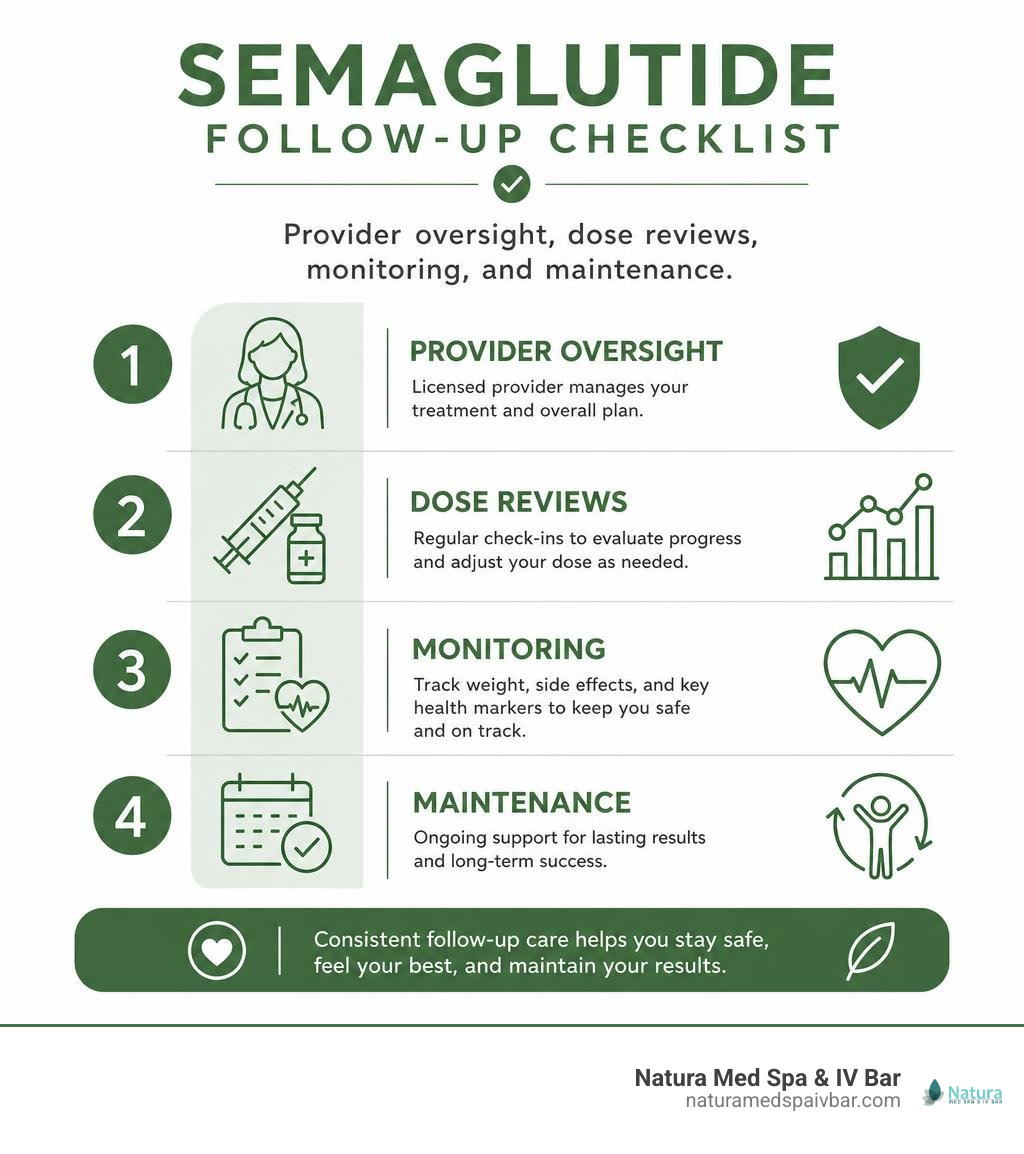
For semaglutide follow up near me, look for a local med spa or prescribing provider that offers scheduled weight checks, dose reviews, side-effect support, and monitoring of key health markers. Before booking, ask:
- Who prescribes and oversees the medication?
- How often are follow-up visits scheduled during dose increases and maintenance?
- What is the plan if you have side effects, a weight-loss plateau, or decide to stop treatment?
Semaglutide can support meaningful weight loss when paired with nutrition, activity, and behavior changes. But follow-up matters: in the STEP 1 extension, people regained about two-thirds of prior weight loss within one year of stopping, while many improvements in blood sugar, cholesterol, and blood pressure moved back toward baseline.
I’m Abla Jad, a finance and operations advisor who has built and scaled a multi-location care business and helps teams create practical systems for consistent client support. In this guide to semaglutide follow up near me, I’ll help you know what reliable ongoing care should include.
Understanding Semaglutide and the Science of Maintenance

When starting semaglutide, understanding how the medication interacts with your physiology is the first step toward long-term success. Semaglutide belongs to a class of medications called glucagon-like peptide-1 (GLP-1) receptor agonists. In your body, natural GLP-1 is a hormone released by the gut in response to food intake. It signals your brain that you are satisfied, curbs persistent food cravings, and slows down gastric emptying so food stays in your stomach longer.
By mimicking this natural incretin hormone at an optimized therapeutic level, semaglutide helps reduce overall caloric intake without the intense, distracting hunger signals that often derail traditional calorie restriction.
In clinical benchmarks, the results speak for themselves. After 68 weeks of once-weekly subcutaneous injections of semaglutide 2.4 mg alongside lifestyle adjustments, clinical trial participants achieved an average weight reduction of 17.3%, compared to just 2.0% in the placebo group (Wilding et al., 2022). Beyond total pounds lost, participants saw meaningful cardiometabolic improvements:
- Blood Pressure: Reductions in both systolic and diastolic blood pressure readings.
- Glycemic Control: Notable drops in fasting blood glucose and HbA1c levels.
- Lipid Profiles: Meaningful decreases in total cholesterol, triglycerides, and systemic inflammation markers.
However, achieving these outcomes is not an overnight event—it is the result of progressive metabolic conditioning supported by regular clinical touchpoints.
What Happens After Stopping Treatment?
One of the most vital questions we address during follow-up consultations is what occurs if you stop taking the medication. Obesity is recognized by modern medicine as a complex, relapsing chronic condition rather than a temporary lack of willpower. When the medication is discontinued, the biological mechanisms driving appetite suppression and metabolic regulation fade.
The landmark STEP 1 trial extension evaluated 327 participants across international clinical sites (including the United States, Canada, Germany, the UK, and Japan) who discontinued semaglutide after 68 weeks of treatment. Within one year (52 weeks) of stopping both the medication and lifestyle support:
- Participants regained an average of 11.6 percentage points of their lost weight.
- They experienced a net loss of only 5.6% from baseline by week 120, meaning participants regained approximately two-thirds of their prior weight loss.
- Most of the cardiometabolic improvements—such as reductions in blood pressure, optimized blood sugar, and balanced cholesterol levels—reverted back toward baseline levels.
These findings highlight why comprehensive medical weight loss is not viewed as a temporary quick fix. When you stop semaglutide without a monitored tapering protocol, hunger hormones can rebound fiercely. Consistent check-ins allow our team to establish sustainable habits, monitor body composition, and craft structured maintenance strategies that protect your health gains.
Why You Need a Semaglutide Follow Up Near Me for Long-Term Success
Beginning GLP-1 therapy without scheduled check-ins is like setting off on a cross-country road trip without a dashboard or fuel gauge. Ongoing follow-up provides the necessary oversight to personalize your dosage, navigate side effects, and ensure that the weight you lose is fat rather than functional muscle tissue.
At our med spa clinics, we champion a modern approach to medical weight loss in Aurora and Cherry Creek, CO, prioritizing client safety, convenience, and measurable progress.
During your routine visits, our experienced aesthetic and wellness professionals focus on several key pillars:
- Dose Titration Oversight: Semaglutide starts at a low dose (typically 0.25 mg weekly) to allow your gastrointestinal system to adapt. We evaluate your response every 4 weeks before adjusting your dosage upward.
- Managing Side Effects: While highly effective, semaglutide can cause mild to moderate side effects, including nausea, constipation, acid reflux, diarrhea, or fatigue. Your follow-up appointments allow us to tweak your administration schedule, suggest targeted hydration strategies, and offer supportive remedies to keep you comfortable.
- Preserving Lean Muscle Mass: Rapid weight reduction can sometimes lead to muscle loss if protein intake and physical activity are neglected. Through body composition assessments, we track fat loss versus muscle retention to ensure your metabolic rate stays resilient.
- Cardiometabolic Tracking: We regularly assess resting vitals, check progress markers, and review relevant lab work to celebrate the invisible internal victories alongside the visual changes.
Key Milestones During Your Semaglutide Follow Up Near Me
Navigating weight loss therapy works best when broken down into clear, structured milestones. Here is what your typical care timeline looks like:
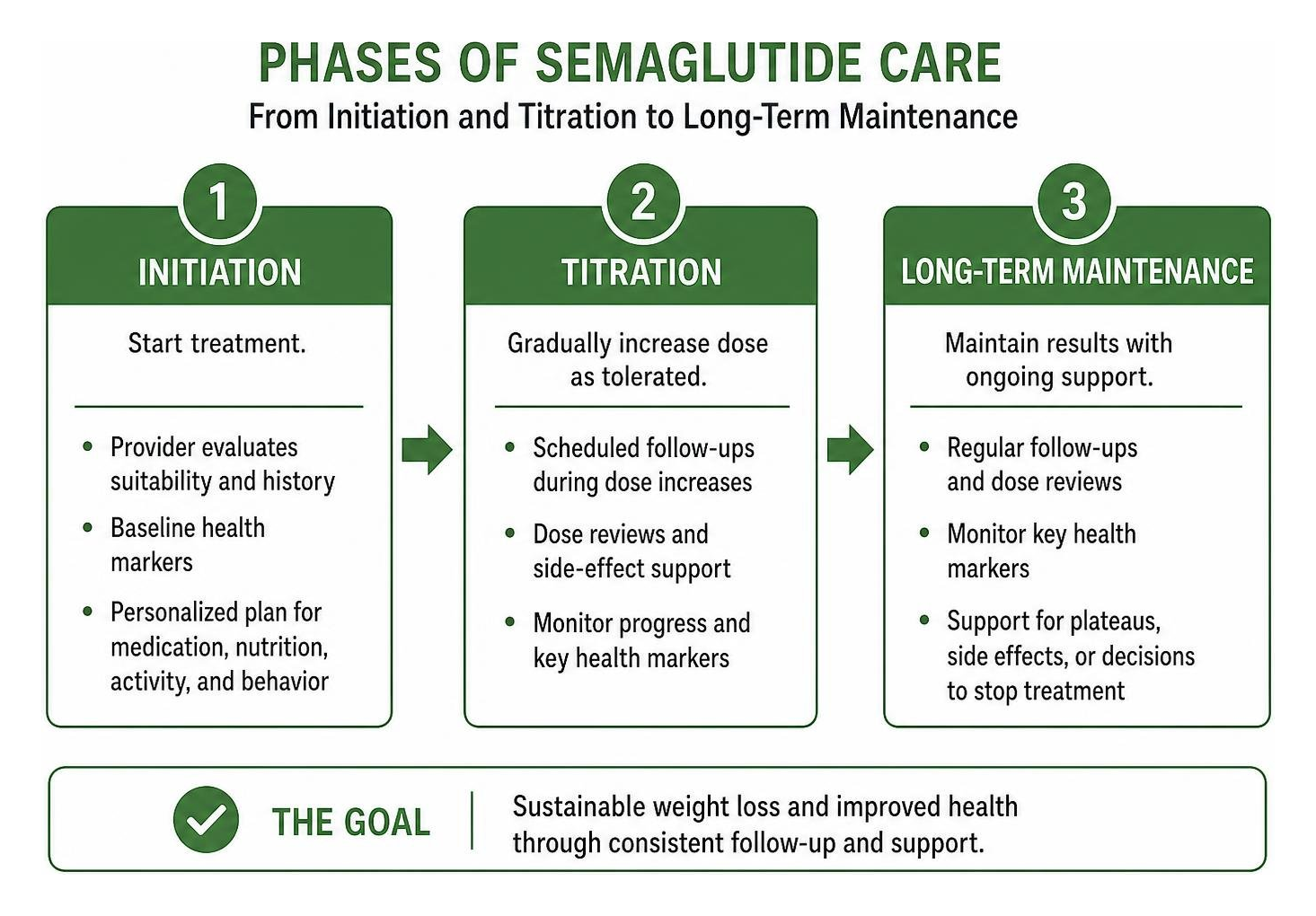
- Weeks 1–4 (Initiation Phase): Starting at the introductory dose, this phase focuses on gastrointestinal tolerance, proper injection technique, and building baseline nutritional routines.
- Weeks 5–16 (Titration Phase): Your dosage is incrementally stepped up every 4 weeks based on tolerance and appetite response. We check in monthly to evaluate appetite suppression, side effects, and body measurements.
- Weeks 17–20 (Target Dose): Once you reach your optimal maintenance dose (up to 2.4 mg weekly), your rate of fat loss stabilizes. We monitor metabolic vitals and discuss intermediate fitness goals.
- Week 68 and Beyond (Long-Term Maintenance): After reaching your goal weight, we collaborate on long-term management—whether that involves maintaining your optimal dose, transitioning to extended dosing intervals, or pairing your regimen with complementary wellness treatments.
Essential Lifestyle Interventions and Treatment Adjustments
While semaglutide serves as a powerful biological ally, long-term vitality requires lifestyle synergy. Sustainable success happens when medication is paired with practical daily habits that you can maintain for years to come.
Our team helps you incorporate sustainable weight loss strategies that fit naturally into your busy lifestyle:
- Nutritional Optimization: Because semaglutide reduces overall appetite, every bite counts. We emphasize adequate protein intake (such as lean poultry, fish, eggs, tofu, and high-quality shakes) to preserve lean tissue, paired with nutrient-dense fiber to promote digestion.
- Resistance Training: Lifting weights or engaging in bodyweight resistance exercises signals your body to retain metabolic muscle mass while shedding adipose tissue.
- Hydration Protocols: Slower gastric emptying makes staying hydrated crucial to avoid mild nausea or sluggish bowels. We often recommend pairing your routine with our specialized wellness infusions.
- Behavioral Support: We work with you to understand your emotional triggers around food, navigate social dining, and establish consistent sleep patterns that regulate stress hormones.
How to Choose the Best Semaglutide Follow Up Near Me
When searching for a local provider to guide your GLP-1 journey across Aurora, Denver, and Cherry Creek, look for a provider that offers personalized care rather than a one-size-fits-all prescription mill.
Consider the following factors:
- Qualified Clinical Oversight: Ensure your plan is supervised by trained providers who understand the nuances of GLP-1 medications and conduct proper health screenings.
- Alternative and Dual-Action Therapies: A quality med spa should offer diverse options. If you experience persistent plateaus or sensitivities with semaglutide, having access to alternative GLP-1/GIP options like tirzepatide provides flexibility.
- Holistic Wellness Support: Look for locations that offer complementary wellness services—such as revitalizing IV therapy, body contouring, and aesthetic treatments—to help you feel confident inside and out.
- Convenient Scheduling and Transparent Pricing: Choose a facility that offers seamless follow-up scheduling, transparent programs, and added savings like military discounts.
Frequently Asked Questions About Semaglutide Follow-Up Care
How often should I schedule follow-up appointments while taking semaglutide?
During the initial titration phase (the first 16 to 20 weeks), you should plan for monthly check-ins every 4 weeks. These regular touchpoints allow our team to assess your progress, evaluate gastrointestinal tolerance, and safely increase your dose. Once you reach a stable maintenance dose and are progressing toward your target weight, follow-up visits can be scheduled every 8 to 12 weeks. If you ever have questions between visits, browse our frequently asked questions or reach out to our team directly.
What happens if I want to stop taking semaglutide?
If you decide to stop semaglutide, you should do so under the direct supervision of your med spa provider rather than stopping abruptly on your own. Clinical trials show that sudden cessation without structured lifestyle guardrails often leads to a rapid return of appetite and substantial weight regain. We can establish a gradual tapering schedule, increase your dietary protein and fiber targets, and closely track your metabolic markers to help preserve your hard-earned results.
Can I switch to another GLP-1 medication during my follow-up visits?
Yes. If you experience unmanageable side effects, hit an extended weight loss plateau, or want to explore dual-receptor therapy, our providers can safely transition you to an alternative like tirzepatide. Because different GLP-1 and dual GIP/GLP-1 medications have distinct dosing equivalents and receptor profiles, our team will calculate an appropriate starting dose to ensure continuous progress without gastrointestinal distress.
Conclusion
Sustaining meaningful weight loss and protecting your cardiometabolic health is a long-term journey that thrives on expert guidance and consistent accountability. Semaglutide provides an exceptional tool to help you achieve your wellness goals, but regular follow-up visits are the foundation that turns short-term results into lasting, vibrant health.
At Natura Med Spa & IV Bar, we deliver convenient, results-driven wellness treatments designed to fit your busy life. Whether you are seeking structured dose monitoring, tailored lifestyle guidance, or complementary wellness therapies across our locations in Aurora, Denver, and Cherry Creek, our dedicated team is here to support you at every milestone.
Ready to optimize your treatment plan? Schedule your semaglutide follow-up consultation today, or contact our med spa team to take the next step toward sustained vitality.
References
Wilding JPH, Batterham RL, Davies M, Van Gaal LF, Kandler K, Konakli K, Lingvay I, McGowan BM, Oral TK, Rosenstock J, Wadden TA, Wharton S, Yokote K, Kushner RF, STEP 1 Study Group. “Weight regain and cardiometabolic effects after withdrawal of semaglutide: The STEP 1 trial extension..” Diabetes, obesity & metabolism, 2022. PMID 35441470.