The Smartest Ways to Access Qualified Semaglutide Support Locally
November 11, 2026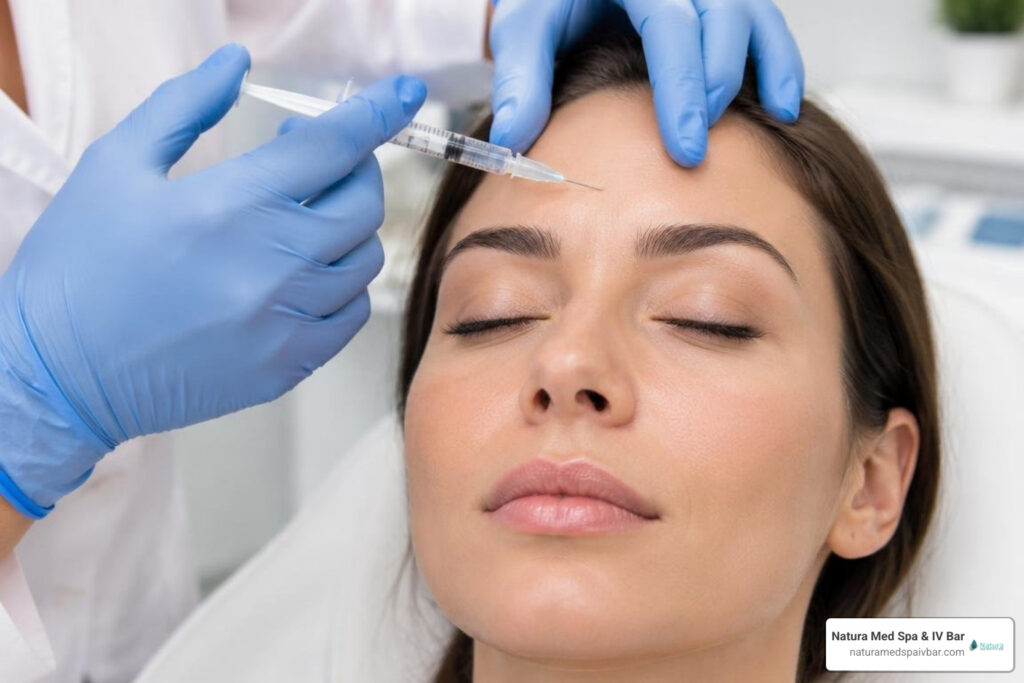
A Practical Guide to Botox Treatment: Benefits & Risks
Botox Treatment: A Quick Guide to Benefits, Results, and Risks
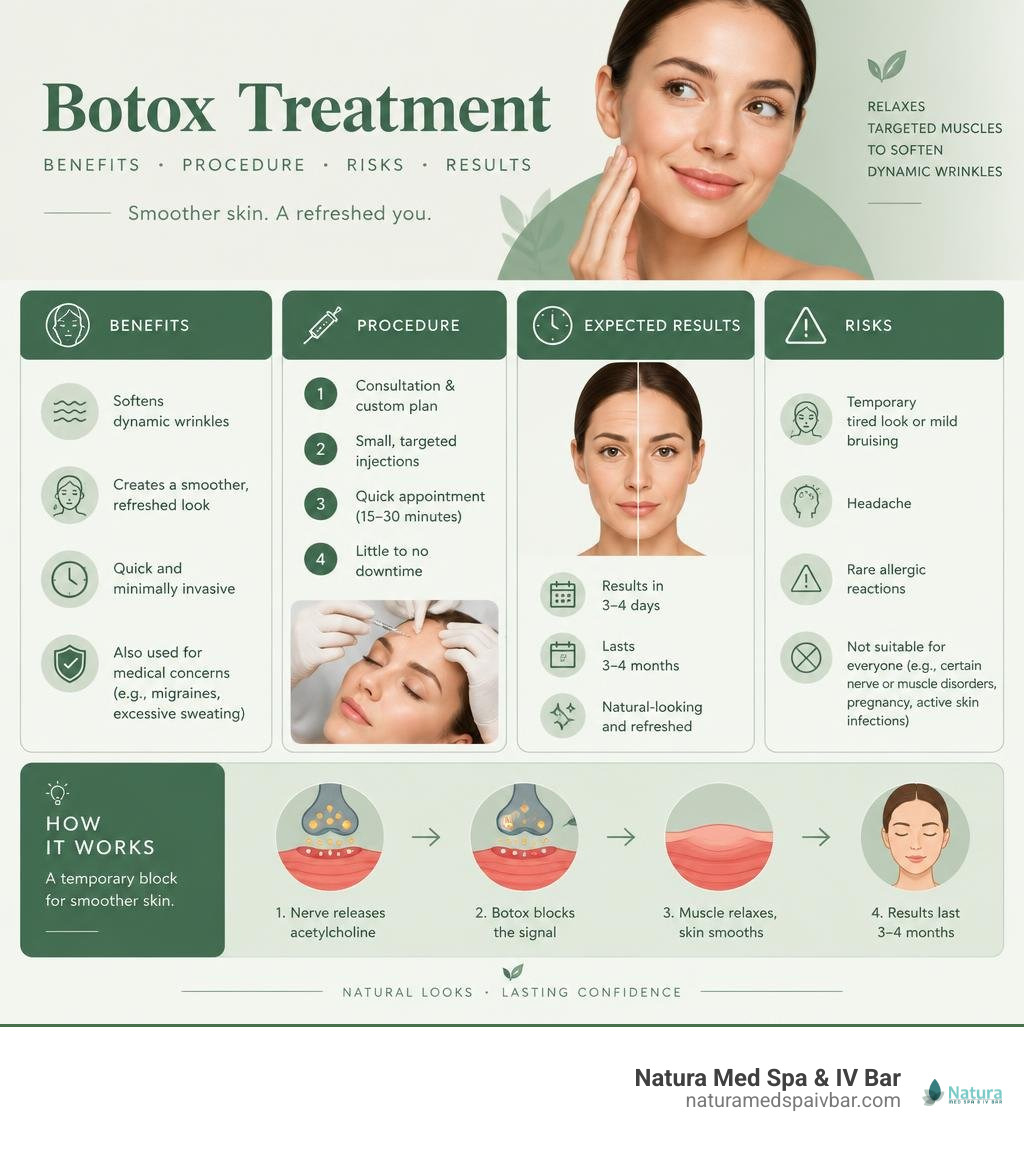
A Botox treatment uses carefully placed injections of botulinum toxin type A to relax selected facial muscles. This softens dynamic wrinkles – the lines made by repeated expressions, such as frown lines, forehead lines, and crow’s feet. It is a quick, minimally invasive option, but safe, natural-looking results depend on an experienced injector, appropriate dosing, and a treatment plan that fits your goals.
For most cosmetic patients, appointments take about 15 to 30 minutes, require little to no downtime, and results commonly last three to four months. Botox can also be used for certain medical concerns, including chronic migraine and excessive sweating. It is not right for everyone, especially people with certain nerve or muscle disorders, active skin infections at the injection site, or pregnancy-related safety concerns.
This guide explains what Botox does, who may be a good candidate, what treatment and recovery involve, realistic costs, and the risks to discuss before booking.
I’m Abla Jad, a CFO, advisor, and founder with more than a decade of experience building scalable systems and leading strategy in growth-stage businesses. Having built and scaled a multi-location med spa, I bring a practical, patient-focused lens to understanding Botox treatment and making informed care decisions.
Understanding Botox Treatment: Mechanism, Uses, and Clinical Efficacy
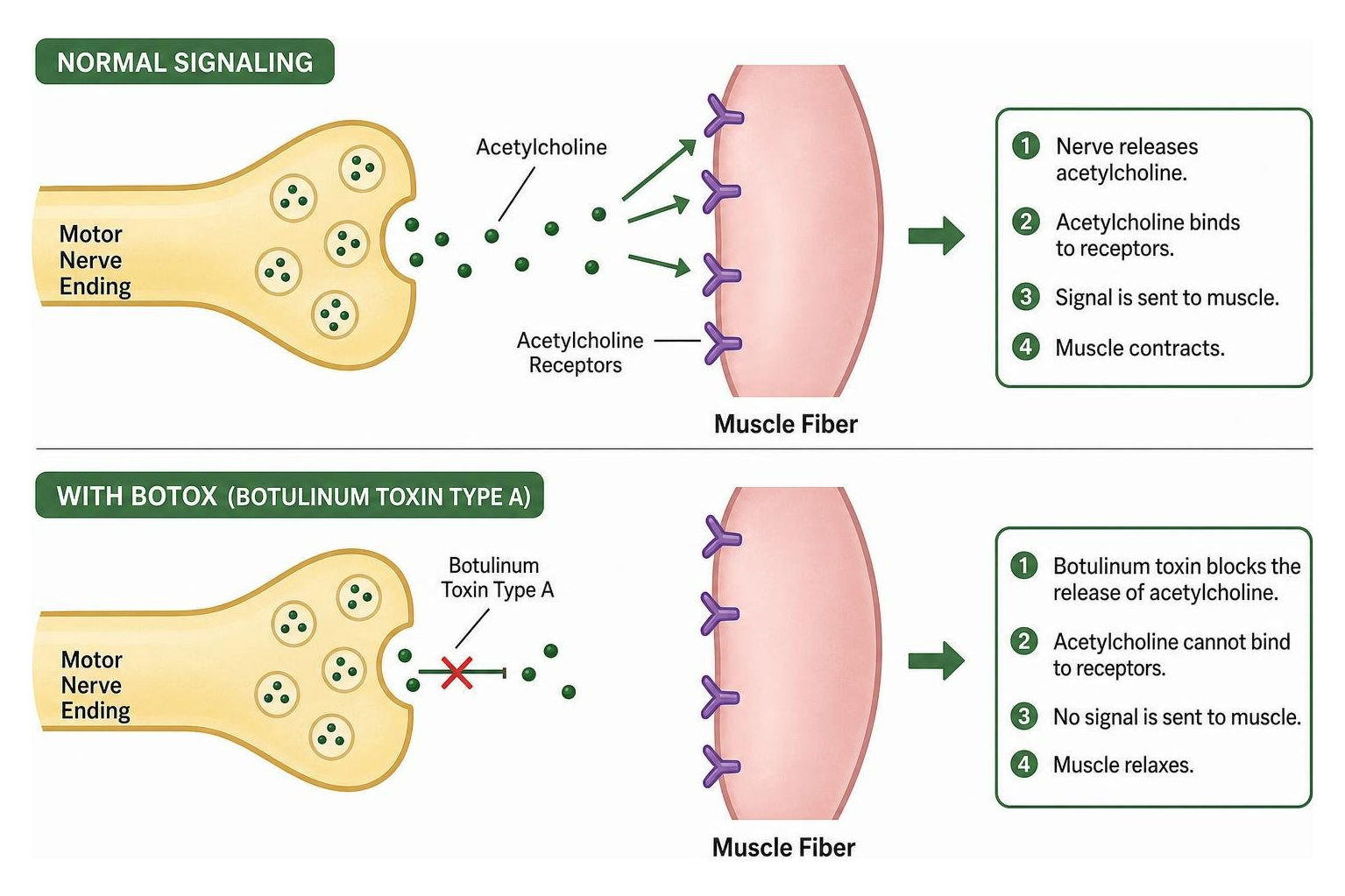
Botox is a purified neurotoxin derived from the bacterium Clostridium botulinum. At its core, the medication works by intercepting the communication network between your motor nerves and your muscle tissues. When you decide to squint, smile, or furrow your brow, your nerve endings release a chemical messenger called acetylcholine. This neurotransmitter binds to receptors on the muscle fibers, instructing them to contract.
When your injector introduces micro-doses of botulinum toxin type A into targeted muscle groups, the neurotoxin temporarily blocks the release of acetylcholine at the neuromuscular junction. Without this chemical signal, the targeted muscle enters a state of localized, controlled relaxation. As the muscle stops its repetitive creasing motion, the overlying skin smooths out, allowing dynamic wrinkles to soften significantly. Exploring the underlying science of botox reveals that this temporary cellular blockade is entirely reversible, as your nerve endings naturally sprout new terminals to restore baseline communication over several months.
The clinical milestones of Botox reflect decades of rigorous medical evaluation. The FDA first approved Botox in 1989 for therapeutic eye muscle disorders (strabismus and blepharospasm). By 2002, the FDA granted approval for cosmetic use to treat moderate to severe glabellar lines (the “11s” between the brows). Subsequent approvals followed for crow’s feet in 2013 and forehead lines in 2017, cementing its position as the gold standard in non-surgical rejuvenation.
Cosmetic vs Medical Applications of Botox Treatment
While widely recognized for aesthetic enhancement, Botox serves essential therapeutic purposes across modern medicine.
Cosmetic applications focus primarily on the upper face:
- Glabellar Lines: Smoothing the deep vertical furrows between the eyebrows that can make you look tired or upset.
- Crow’s Feet: Softening the fine lateral lines fanning out from the corners of the eyes.
- Forehead Lines: Minimizing horizontal creases across the brow; review our guide to smoothing forehead lines to see typical aesthetic outcomes.
Medical applications target neuromuscular and autonomic dysfunction:
- Chronic Migraine: Injections across specific head and neck trigger points prevent headache days for adults experiencing 15 or more headache days per month.
- Axillary Hyperhidrosis: Blocking the acetylcholine signals that stimulate sweat glands provides months of relief from severe underarm sweating.
- Cervical Dystonia: Relieving painful, involuntary contractions in neck muscles that cause abnormal head positioning.
- Blepharospasm: Managing uncontrollable, involuntary spasms of the eyelid muscles.
- Temporomandibular Joint (TMJ) Pain: Calming overworked jaw clenching muscles to alleviate chronic jaw tension, teeth grinding (bruxism), and related facial pain.
Off-Label Uses and Advanced Aesthetic Applications
Beyond standard FDA-approved sites, expert injectors use Botox for advanced full-face balancing:
- The Lip Flip: Micro-dosing the orbicularis oris muscle relaxes the upper lip border, allowing it to gently roll outward and create the appearance of a fuller lip without adding extra volume.
- Gummy Smile Correction: Placing precise units near the base of the nose relaxes hyperactive upper lip elevator muscles, ensuring less gum tissue shows when smiling.
- DAO Depressor Treatment: Injecting the depressor anguli oris (DAO) muscle prevents the corners of the mouth from pulling downward into a perpetual frown.
- Masseter Reduction: Performing jawline contouring with masseter botox reduces bulk in enlarged chewing muscles, creating a tapered, refined lower facial contour.
- Cheek and Midface Contouring: Patients often explore non-surgical cheek slimming to achieve a sleek, harmonious facial profile.
- Platysmal Bands (Nefertiti Lift): Injecting vertical muscular bands along the neck and jawline creates a smoother, lifted neck contour.
Candidate Eligibility, Safety Profiles, and Potential Risks
An ideal candidate for aesthetic neurotoxins is generally a healthy adult (age 18 and older) who notices moderate to severe dynamic lines caused by repetitive facial expressions. Candidates who benefit most have realistic expectations, understanding that Botox softens movement lines rather than erasing deep, permanent skin folds at rest.
Contraindications must always be respected to ensure patient safety:
- Neuromuscular Disorders: Conditions such as myasthenia gravis, amyotrophic lateral sclerosis (ALS), or Lambert-Eaton syndrome strictly prohibit treatment, as neurotoxins can exacerbate systemic muscle weakness.
- Infections and Skin Conditions: Any active bacterial, viral, or fungal infection at the planned injection sites requires delaying treatment until fully healed.
- Pregnancy and Nursing: Because clinical safety trials cannot ethically be performed on pregnant or breastfeeding individuals, treatment is not recommended during these periods.
- Allergies: Known hypersensitivity to botulinum toxin type A or human albumin is a direct contraindication.
Before receiving any injections, patients complete an informed injection therapy consent process to review medical history, drug interactions, and procedural expectations.
Common Side Effects vs Adverse Reactions
Botox boasts an exceptional safety record when administered by skilled medical providers, but understanding the difference between standard, transient side effects and uncommon adverse events is vital.
| Category | Typical Symptoms | Duration / Action Required |
|---|---|---|
| Common, Mild Side Effects | Mild redness, pinpoint swelling, slight bruising at injection sites, mild tension headache | Resolves naturally within 24 to 72 hours; cold compresses help minimize swelling. |
| Uncommon Complications | Eyelid ptosis (drooping upper lid), brow heaviness, facial asymmetry, temporary diplopia (double vision) | Rare (under 1-2% with expert injectors); results from unintended neurotoxin migration. Gradually resolves over several weeks; prescription eye drops (apraclonidine) can alleviate ptosis. |
| Severe Adverse Events | Systemic muscle weakness, difficulty swallowing, breathing trouble, severe allergic reaction (hives, wheezing) | Extremely rare at cosmetic dosages; requires immediate emergency medical evaluation. |
We mitigate risk by adhering to conservative dosing, utilizing ultra-fine micro-needles, and practicing strict anatomical mapping.
Longevity, Touch-Ups, and Maintenance Schedules
On average, cosmetic Botox results last three to four months. However, longevity varies based on individual factors:
- Metabolic Rate: Highly active individuals or those with rapid metabolisms may clear the protein slightly faster.
- Muscle Strength and Mass: Stronger facial muscles (such as the masseters or glabella in athletic individuals) often require higher initial unit counts or slightly more frequent touch-ups.
- Consistency: Regular treatments can produce a muscle re-education effect. Over time, the treated muscles become conditioned to relax, allowing results to last closer to four or even five months between visits.
Adhering to practical post-care botox recovery tips—such as remaining upright for four hours and avoiding vigorous exercise for 24 hours—ensures the product binds exactly where placed.
Navigating the Procedure: Preparation, Steps, and What to Expect
Proper preparation sets the stage for optimal, bruise-free results. In the week leading up to your visit:
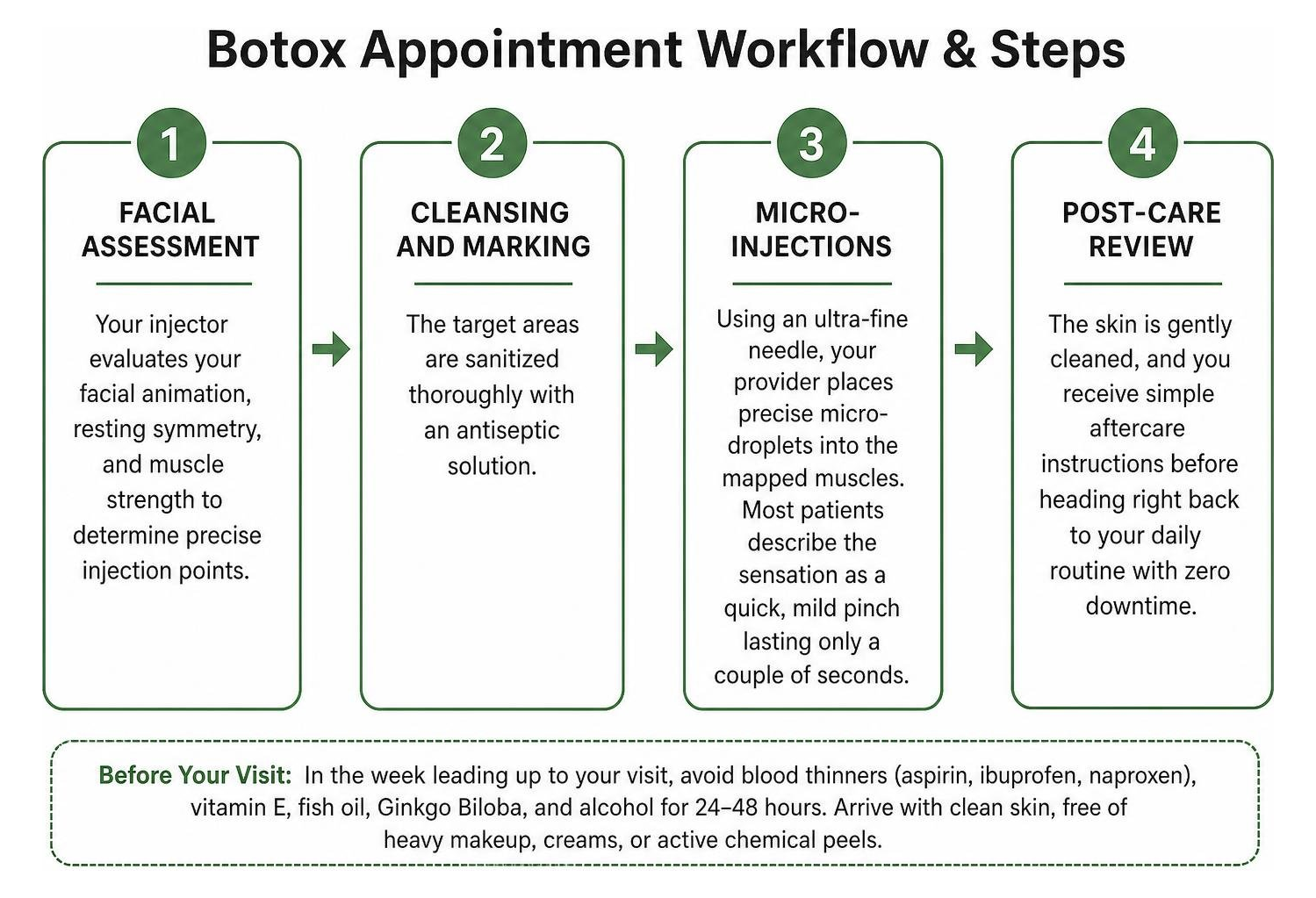
- Avoid over-the-counter blood thinners such as aspirin, ibuprofen, naproxen, vitamin E, fish oil, and Ginkgo Biloba (unless prescribed by your physician).
- Avoid alcohol consumption for 24 to 48 hours prior to your session to reduce capillary fragility.
- Arrive with clean skin, free of heavy makeup, creams, or active chemical peels.
What to Expect During Your Botox Treatment Appointment
At our med spa locations across Denver, Aurora, and Cherry Creek, we design every appointment to be comfortable, efficient, and relaxing. Enjoying a seamless experience with botox in Denver means knowing each step of your care path in advance:
- Facial Assessment: Your injector evaluates your facial animation, resting symmetry, and muscle strength to determine precise injection points.
- Cleansing and Marking: The target areas are sanitized thoroughly with an antiseptic solution.
- Micro-Injections: Using an ultra-fine needle, your provider places precise micro-droplets into the mapped muscles. Most patients describe the sensation as a quick, mild pinch lasting only a couple of seconds.
- Post-Care Review: The skin is gently cleaned, and you receive simple aftercare instructions before heading right back to your daily routine with zero downtime.
Treatment Costs, Budgeting, and Insurance Coverage
Cosmetic Botox is typically priced in two ways across Colorado:
- Per-Unit Pricing: Ranging from $11 to $18 per unit, allowing you to pay exclusively for the exact dosage your anatomy requires.
- Per-Area Pricing: Flat fees assigned to standard treatment zones (e.g., glabella, forehead, or crow’s feet).
A standard upper-face treatment (forehead, 11s, and crow’s feet) generally uses between 30 and 60 units, placing total costs between $350 and $900 per session. Cosmetic treatments are not covered by health insurance. However, medical applications (such as chronic migraine or severe hyperhidrosis) are frequently eligible for full or partial insurance coverage when pre-authorized.
For clients planning ongoing maintenance, reviewing options for affordable injection packages can make consistent aesthetic care budget-friendly.
Botox and Complementary Facial Treatments
Botox excels at quieting muscular contractions, but true skin vitality often involves addressing skin texture, hydration, and volume loss concurrently. Integrating neuromodulators into a multi-modality regimen delivers radiant, balanced rejuvenation.
Synergistic Approaches: Botox and Facials
Pairing neurotoxin injections with professional skincare enhances both skin tone and structural smoothness. Experiencing rejuvenating med spa botox facials allows clients to address superficial cellular turnover alongside deep muscular relaxation. When combining services, we generally recommend receiving deep facials or chemical exfoliations a few days before your injections, or waiting at least 48 to 72 hours after Botox to avoid rubbing the treated injection sites.
Finding Qualified Injectors and Board-Certified Specialists
Your safety and visual results depend entirely on the skill, anatomical knowledge, and artistic eye of your injector. Always verify that your provider operates under rigorous medical supervision within a dedicated, clean clinical environment.
When evaluating providers:
- Review before-and-after galleries focusing on dynamic, natural expressions.
- Confirm standard hygiene protocols, sterile single-use equipment, and authentic, unadulterated product sourcing.
- Use our comprehensive checklist for finding local injectors to screen potential practices.
- Check third-party patient reviews for top-rated medical aesthetic clinics in Colorado across Denver, Cherry Creek, and Aurora.
Frequently Asked Questions about Botox
How soon will I see results from my injections?
While individual response times vary slightly, initial softening typically begins within 3 to 5 days post-treatment. Full therapeutic and cosmetic results develop progressively, reaching peak effect between days 10 and 14. We recommend waiting the full two weeks before assessing your final result or requesting minor dosage adjustments.
Can Botox cause a frozen or unnatural facial expression?
No, not when administered correctly. The feared “frozen” look is the result of over-dosing or placing neurotoxin into incorrect muscle groups. Modern aesthetic practice emphasizes natural movement preservation. Skilled injectors map your individual facial dynamics to relax excessive wrinkling while preserving your ability to smile, express surprise, and convey genuine emotion naturally.
What is the difference between dynamic and static wrinkles?
Dynamic wrinkles appear only when you contract your facial muscles (such as squinting or raising your eyebrows). Static wrinkles are lines etched permanently into the skin that remain visible even when your face is completely relaxed, caused by long-term collagen depletion, sun damage, and age. Botox directly treats dynamic lines and prevents them from deepening into static wrinkles. For established static wrinkles, combining Botox with hydrating facials and nourishing skincare treatments yields the most complete correction.
Conclusion
A well-executed Botox treatment is one of the most reliable, time-tested tools available for smoothing dynamic facial lines, preserving skin elasticity, and relieving chronic muscle tension. Achieving refreshed, natural-looking results comes down to expert anatomical mapping, conservative dosing, and personalized care.
At Natura Med Spa & IV Bar, our licensed medical injectors blend clinical precision with artistic balance across our welcoming Colorado med spa locations in Denver, Aurora, and Cherry Creek. We are proud to provide convenient, results-driven beauty and wellness treatments, complete with military discounts for our service members.
Schedule your consultation today for our professional botox treatment services and take the first step toward smooth, confident skin.