Pucker Up: Why Volbella Lip Filler is Your New Best Friend
July 7, 2026
Plump on a Budget: Your Guide to Filler and Botox Packages
July 11, 2026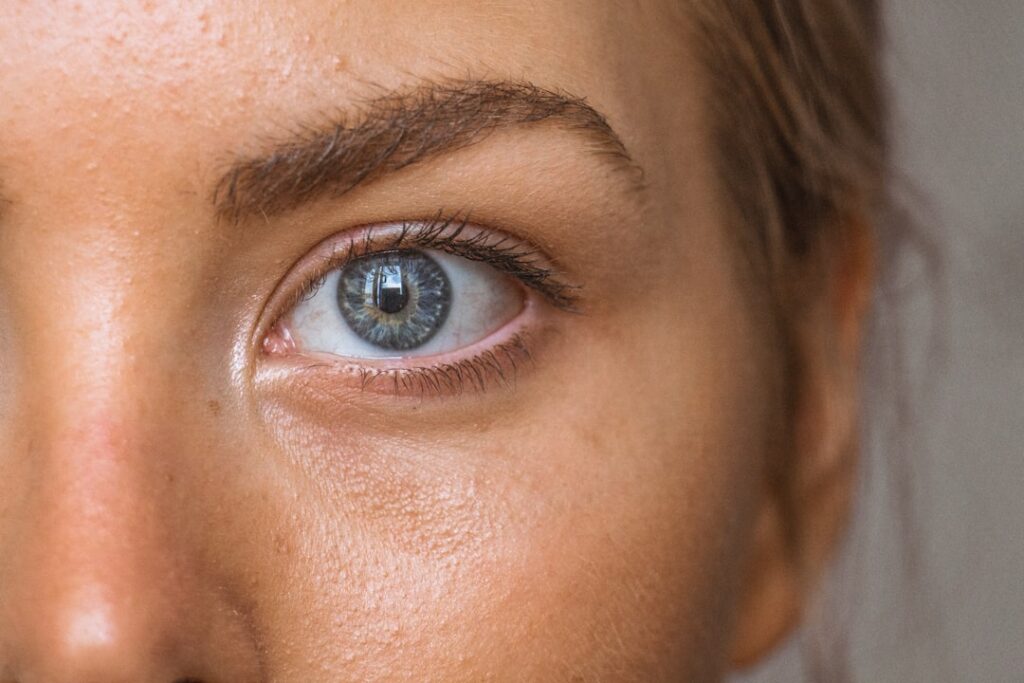
Eyelid Plasma Lift: The Non-Surgical Way to Perk Up Tired Eyes
Tired Eyes Don’t Have to Be Permanent
An eyelid plasma lift is a non-surgical treatment that tightens and lifts loose skin around the eyes — no scalpel, no stitches, no general anesthesia required.
Quick answer for busy readers:
- What it is: A non-invasive procedure using plasma energy to contract eyelid skin and stimulate collagen
- Who it’s for: Adults with mild to moderate hooding, sagging, crepey skin, or crow’s feet around the eyes
- How long it takes: 30–60 minutes per session
- Downtime: About 3–7 days of visible swelling and small carbon dots (crusts) on the skin
- Results: Visible improvement after healing, with final results at 8–12 weeks; lasting 1–4 years
- Cost: Roughly $500–$2,500 USD per session depending on treatment area and provider
The skin around the eyes is one of the first places to show age. Fine lines, drooping upper lids, and crepey under-eye texture can make you look tired — even when you’re not. For many people in their 30s, 40s, and 50s, those changes feel frustrating because they don’t match how you feel on the inside.
Surgery can fix it. But surgery means anesthesia, incisions, two to four weeks of recovery, and costs that often start at $3,000 and climb well above that.
The eyelid plasma lift sits in the middle ground: more effective than basic skincare, far less invasive than surgery. And in July 2026, it’s one of the fastest-growing non-surgical eye rejuvenation options at medical spas across the country.
What is an Eyelid Plasma Lift and How Does It Work?
To understand how an eyelid plasma lift works, we have to take a quick trip back to high school physics. You probably remember the three basic states of matter: solid, liquid, and gas. Plasma is the fourth state of matter. It is created when gas is highly ionized, allowing it to conduct electricity.
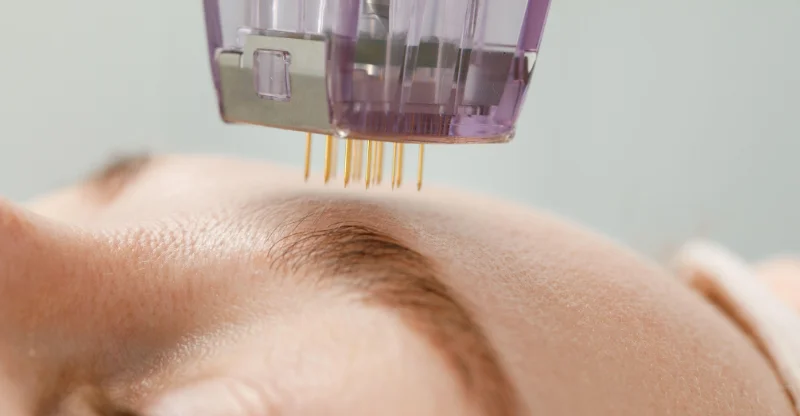
During an eyelid plasma lift (often called plasma fibroblast therapy), a specialized device ionizes the nitrogen and oxygen molecules in the air between the device tip and the skin. This creates a tiny, controlled plasma arc—essentially a microscopic spark of lightning.
When this spark approaches the skin, it performs a process called sublimation. Sublimation means turning a solid directly into a gas. The plasma arc instantly vaporizes a microscopic point on the surface of the skin without actually touching the skin or cutting into it.
This process does two incredible things simultaneously:
- Immediate Tissue Contraction: The heat from the sublimation causes the superficial skin fibers to contract instantly, shrinking the excess skin volume of the eyelid.
- Deep Fibroblast Activation: The thermal energy penetrates into the deeper dermal layer. This heat acts as a wake-up call for your fibroblasts—the worker-bee cells responsible for producing structural proteins. This triggers a massive wave of new collagen production and elastin stimulation over the next few months.
This biological double-whammy makes plasma energy uniquely effective. Unlike lasers or chemical peels that exfoliate or resurface, plasma fibroblast actually reduces skin volume and tightens the remaining tissue from the inside out. For a deeper look at how we utilize this energy across the body, you can read The Ultimate Guide to Cold Plasma Skin Tightening or explore our comprehensive options for non-surgical skin tightening.
If you are a fan of clinical evidence, you will be pleased to know that the medical community has thoroughly studied this technology. For instance, a landmark study highlighted in Scientific research on plasma blepharoplasty demonstrated that patients achieved robust skin contraction and high satisfaction rates after just two plasma sessions.
How the Plasma Arc Contracts Eyelid Skin
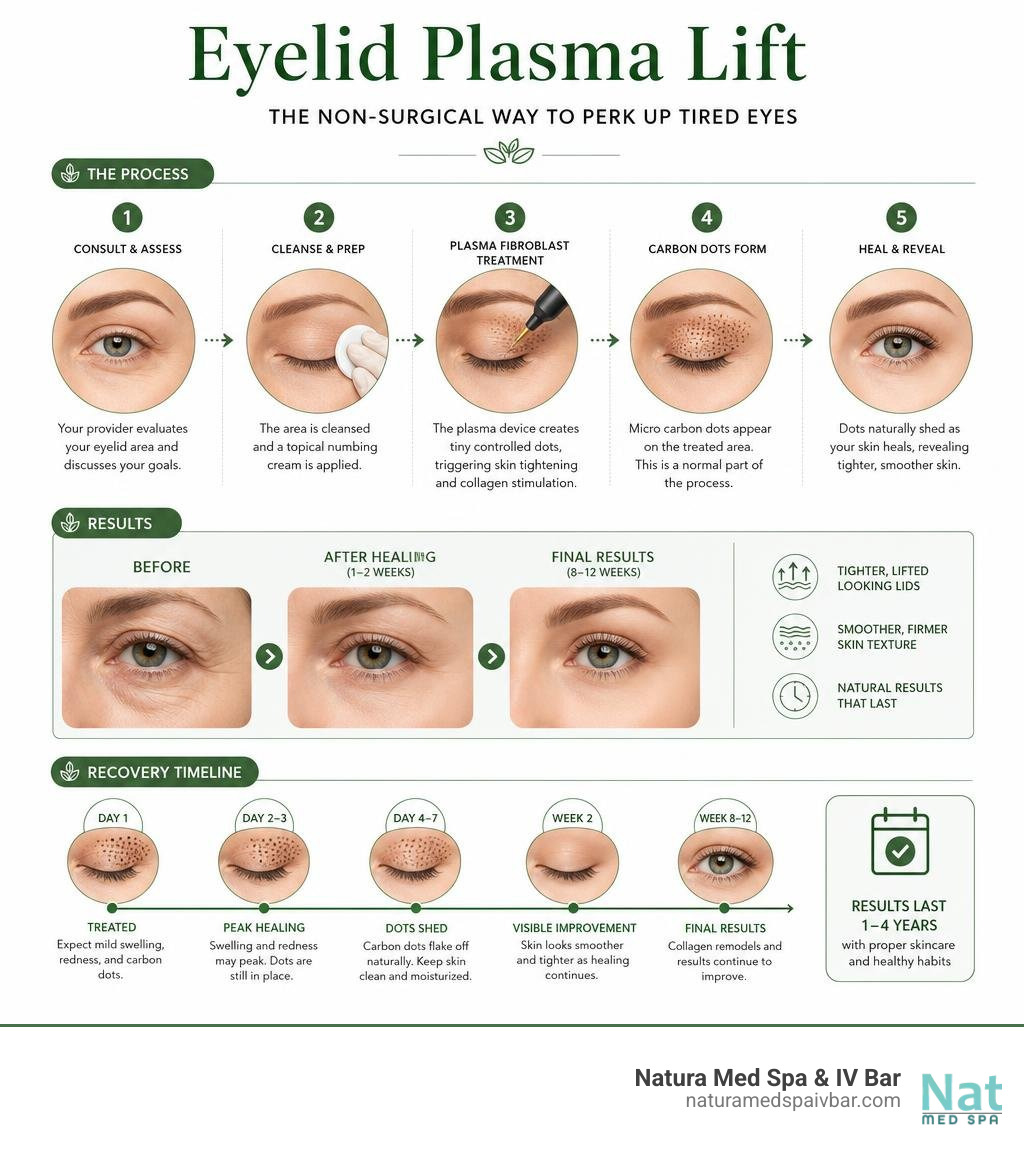
When the practitioner moves the plasma device across the target area, they do not sweep it like a laser. Instead, they apply the energy in a strategic grid of tiny, individual points.
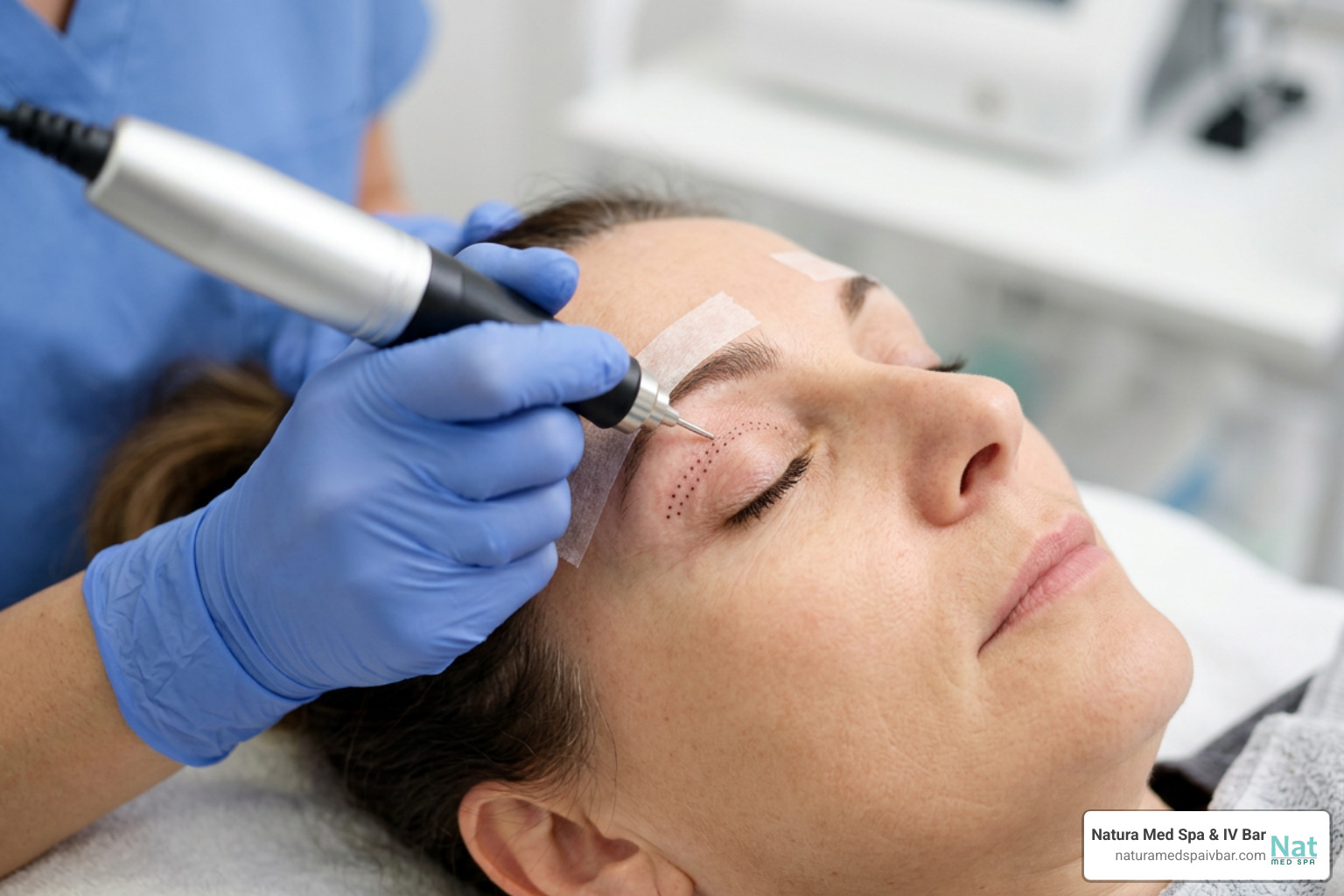
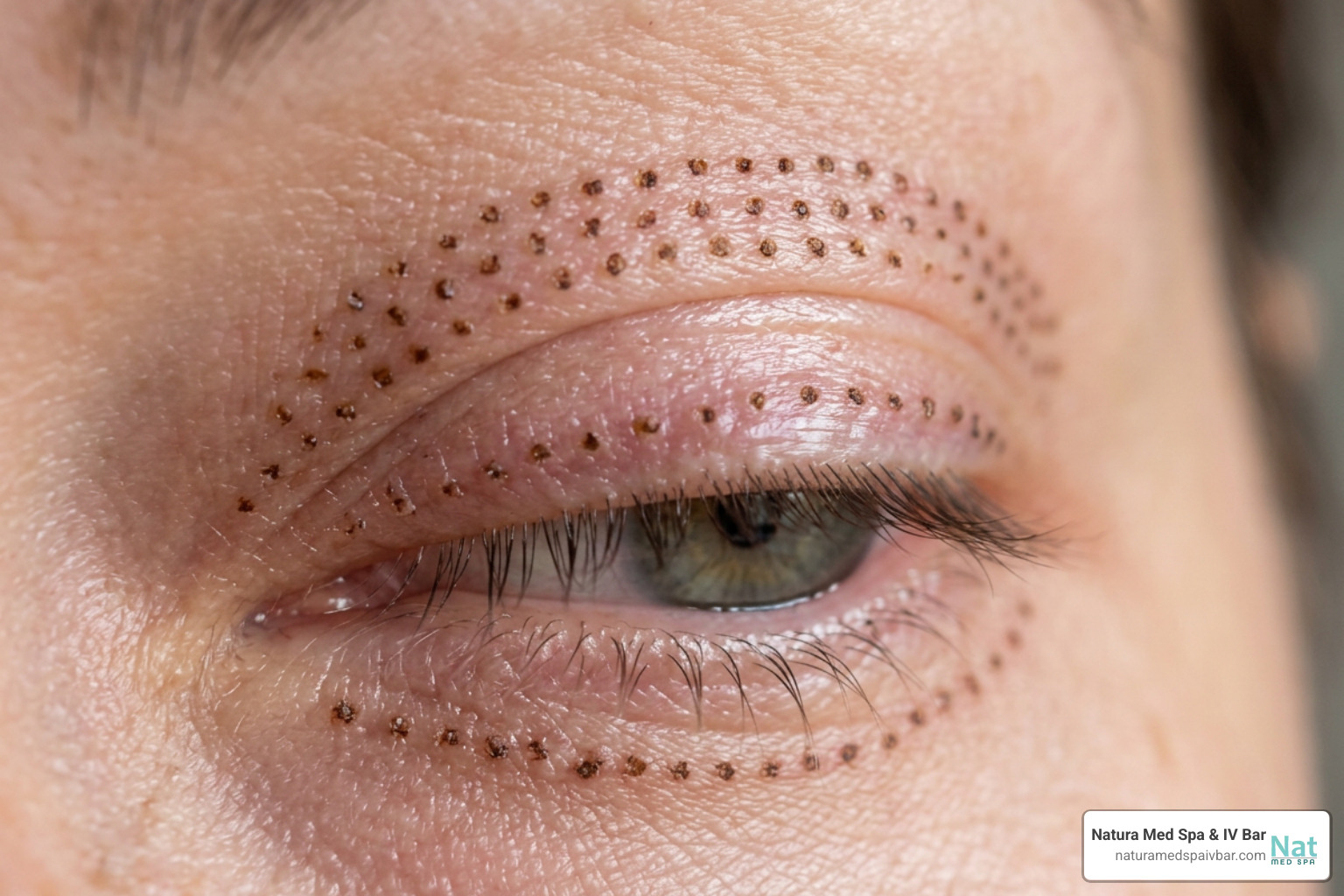
Each micro-injury creates a tiny, dark brown crust on the surface of the skin, often called a “carbon dot.” These dots act as natural biological bandages. Underneath these protective crusts, the skin is rapidly remodeling. Because the treatment leaves tiny bridges of untreated skin between each dot, the healing process is incredibly fast compared to fully ablative laser resurfacing. As the dots heal and naturally flake off over the course of a week, they reveal a smoother, tighter, and visibly lifted eye area.
Who is the Ideal Candidate for an Eyelid Plasma Lift?
While the eyelid plasma lift is a fantastic tool, it is not a one-size-fits-all miracle worker. The ideal candidate is someone who has:
- Mild to moderate skin laxity (sagging) on the upper or lower eyelids.
- Hooded eyelids that make applying makeup difficult or make the eyes look permanently sleepy.
- Crepey, thin “tissue paper” skin texture under the eyes.
- Fine lines and wrinkles, such as stubborn crow’s feet extending from the outer corners of the eyes.
- Realistic expectations about a gradual, natural-looking improvement rather than a dramatic surgical transformation.
The Fitzpatrick Skin Type Constraint
Because plasma energy generates localized heat, candidate selection must take the Fitzpatrick skin phototype scale into account. The ideal candidates are those with Fitzpatrick skin types I through III (fair to light brown skin tones).
People with Fitzpatrick skin types IV through VI (medium brown to dark skin tones) have a significantly higher risk of post-inflammatory hyperpigmentation (dark spots) or hypopigmentation (light spots) as the skin heals. For these skin types, alternative tightening modalities may be much safer.
Key Contraindications
You should avoid this treatment if you:
- Are pregnant or breastfeeding.
- Have an active skin infection or open wound in the eye area.
- Have a history of keloid scarring or poor wound healing.
- Wear a pacemaker (as some electrical devices can interfere with them).
- Have severe, heavy hooding caused by structural fat herniation (bags under the eyes caused by bulging fat pads), which typically requires surgical intervention.
Eyelid Plasma Lift vs. Surgical Blepharoplasty
If you are trying to decide between a non-surgical plasma lift and a trip to a plastic surgeon, it helps to look at them side by side.
Traditional surgical blepharoplasty is the gold standard for severe aging changes. During surgery, a doctor cuts away excess skin and physically repositions or removes herniated fat pads. However, surgery carries inherent risks: general anesthesia complications, potential infection, scarring, asymmetry, and rare but serious risks like dry eye syndrome or ectropion (where the lower eyelid turns outward).
An eyelid plasma lift offers a middle-ground alternative. It does not cut the skin, does not require general anesthesia, and carries a fraction of the risk.
Here is a quick breakdown to help you compare:
| Feature | Eyelid Plasma Lift (Non-Surgical) | Surgical Blepharoplasty (Traditional Surgery) |
|---|---|---|
| Invasiveness | Non-invasive; no incisions or stitches | Invasive; requires scalpel cuts and sutures |
| Anesthesia | Topical numbing cream | Local with sedation or General anesthesia |
| Downtime | 3–7 days of swelling and visible carbon dots | 2–4 weeks of swelling, bruising, and stitches |
| Risks | Temporary pigment changes, swelling, minor redness | Scarring, infection, asymmetry, dry eyes, nerve damage |
| Longevity | 1–4 years (depending on lifestyle and aging) | 5–10+ years (often permanent for fat removal) |
| Cost Range | $500 – $2,500 | $3,000 – $8,000+ |
| Best For | Mild to moderate skin laxity and crepey texture | Severe sagging, heavy hooding, and protruding fat pads |
While surgery provides a more permanent and dramatic change, many of our clients in Colorado prefer the plasma lift because they can achieve a refreshed, natural look without the high price tag or the scary surgical risks. If you want to explore the full suite of non-surgical options we offer to keep your skin looking youthful, browse our experience luxury med spa page.
What to Expect: Recovery, Results, and Cost
Let’s talk about the practical details. When you come in for an eyelid plasma lift, the entire process usually takes about an hour.
- Preparation: We apply a medical-grade topical numbing cream to the eyelids and let it sit for 30 to 45 minutes to ensure you are completely comfortable.
- Treatment: We map out the grid pattern and apply the plasma energy. You will hear a light snapping sound and smell a faint scent of ozone as the air ionizes.
- Immediate Aftermath: Immediately after treatment, the area will feel warm, similar to a moderate sunburn, and you will see a neat grid of tiny brown carbon dots.
The Cost of a Plasma Eyelid Lift
The typical cost of a plasma eyelid treatment ranges from $500 to $2,500 USD per session. The exact price depends on whether you are treating the upper eyelids, the lower eyelids, or both, as well as the severity of the skin laxity.
Because it is a cosmetic treatment, it is not covered by health insurance. However, when compared to the thousands of dollars required for surgery, facility fees, and anesthesiologist costs, it remains an incredibly cost-effective way to achieve long-term skin tightening. You can view our full menu of pricing and options on our med spa services page.
Medical-Grade Devices vs. Salon Pens for Your Eyelid Plasma Lift
It is incredibly important to understand that not all plasma devices are created equal.
If you search online, you will find cheap, handheld “plasma pens” for sale on consumer websites for under $50. You will also see local beauty salons offering ultra-cheap plasma treatments using unregulated, battery-powered pens.
These cheap, salon-grade devices are essentially high-frequency electrical arc pens. They do not utilize true, controlled nitrogen plasma gas. Instead, they work like a tiny soldering iron, burning the top layer of the skin through direct electrical heat. Because their energy output fluctuates wildly, they carry an incredibly high risk of:
- Permanent scarring
- Severe burns
- Post-inflammatory hyperpigmentation (especially in darker skin tones)
- Skin infections
In contrast, professional medical spas utilize certified, medical-grade nitrogen plasma technologies. These devices use direct current (DC) voltage to create a highly stable, precise plasma arc that targets the exact depth of the epidermis without damaging the surrounding tissue. True medical-grade plasma energy is not chromophore-dependent, meaning it doesn’t target melanin in the same erratic way a cheap electrical pen does, making it vastly safer and more consistent.
The Recovery Timeline and Aftercare Protocol
How you care for your skin after your treatment is just as important as the treatment itself. Here is what you can expect day-by-day:
- Days 1–3 (The Swelling Peak): Expect significant swelling around the eyes. It is usually most pronounced the morning after treatment. Your eyes will feel heavy, tight, and warm. The carbon dots will look dark and prominent.
- Days 4–7 (The Crust Phase): The swelling will subside rapidly. The treated area will feel dry and itchy as the micro-injuries heal. The carbon dots will turn into dry, tiny crusts.
- Days 8–10 (The Shedding Phase): The tiny crusts will begin to flake off naturally. Do not pick them! Let them shed on their own. Underneath, your new skin will look fresh, smooth, and slightly pink.
- Weeks 3–4 (The Pink Phase): The pinkness will fade completely. You will start to see the first signs of real tightening as early collagen remodeling begins.
- Months 2–3 (Final Results): The deep collagen and elastin rebuilding process is complete. Your eyelids will look smoother, firmer, and naturally lifted.
Essential Aftercare Steps for Safe Healing
To ensure the best possible results and prevent scarring, follow this strict aftercare protocol:
- Keep it clean and dry: Gently cleanse the area with sterile saline or a very mild, non-alcohol cleanser and pat dry. Avoid getting the area wet in a hot shower for the first 24 to 48 hours.
- Do not pick the crusts: Picking at the carbon dots can lead to permanent scarring, pitted skin, or hyperpigmentation.
- Sleep elevated: Use two or three pillows to keep your head elevated at a 30-to-45-degree angle for the first 3 to 5 nights to minimize morning swelling.
- Skip the makeup: Do not apply any eye makeup, mascara, or concealer until all the carbon crusts have completely fallen off (usually 7 to 10 days).
- Apply a thin layer of healing balm: Use only the gentle, skin-sensitive healing oil or ointment recommended by your practitioner to keep the skin hydrated and soothe itching.
- Strict sun protection: Once the crusts fall off, apply a physical, mineral-based SPF 30+ daily and wear sunglasses whenever you go outside. Your fresh skin is highly vulnerable to UV damage for at least 3 months.
- Avoid active skincare: Stop using retinols, glycolic acid, vitamin C, or exfoliating scrubs for at least 4 weeks post-treatment.
Frequently Asked Questions About Plasma Fibroblast Eyelid Treatments
How long do the results of a plasma eyelid lift last?
While nothing can stop the natural aging process, the results of an eyelid plasma lift are remarkably long-lasting. For most patients, the visible tightening and lifting effects last between 1 and 4 years.
Because the plasma arc actually sublimates (vaporizes) excess skin volume, those specific skin cells are gone, making a portion of the tightening permanent. However, your skin will continue to age naturally over time. Maintaining your results with a medical-grade skincare routine, daily sunscreen, and healthy lifestyle habits will help preserve your refreshed look. Many clients choose to undergo a minor maintenance touch-up every couple of years.
Is the plasma fibroblast procedure painful?
With the application of a high-strength topical numbing cream, most patients find the procedure highly tolerable.
Instead of sharp pain, you will likely feel a sensation of localized heat and a light, prickly tingling as the plasma spark touches the skin. Some areas, like the skin closest to the nose or the lash margin, can be slightly more sensitive. After the treatment, your eyelids will feel warm, tight, and itchy for a few days, which can be easily managed with cool compresses (not applied directly to bare skin) and the recommended healing ointments.
How many sessions are typically required?
Many patients with mild skin laxity or early crepeiness see beautiful, satisfying results after a single session.
However, if you have moderate skin sagging or deeper wrinkles, you may need 2 to 3 sessions to achieve your ultimate aesthetic goals. Sessions are typically spaced 6 to 8 weeks apart to allow the skin’s collagen remodeling process to fully mature before applying more energy. During your initial consultation, we will evaluate your skin type and laxity to create a personalized treatment plan tailored specifically to your eyes.
Conclusion
If you are tired of looking tired but want to completely avoid the risks, downtime, and high costs of surgery, the eyelid plasma lift is an exceptionally smart, modern alternative. By harnessing the power of true plasma energy, you can naturally tighten loose skin, smooth out crepey texture, and restore a bright, youthful, and well-rested look to your eyes.
At Natura Med Spa & IV Bar, we are proud to serve our community with results-driven beauty and wellness treatments across our convenient Colorado locations, including Aurora, Denver, and Cherry Creek. As a veteran-friendly clinic, we are also honored to offer military discounts to those who serve.
Ready to wake up to brighter, tighter, and more youthful-looking eyes? Schedule your non-surgical skin tightening consultation today and let our expert team help you look as vibrant on the outside as you feel on the inside!