
Drip Your Way to Wellness Across the Denver Metro Area
October 2, 2026
The Ultimate Guide to Botox on Sale and Special Deals
October 7, 2026
How to Find a Medical Weight Loss Program That Actually Works
Why a Weight Loss Medical Program Is Different From Everything You’ve Tried Before
A weight loss medical program is a clinically supervised approach to obesity treatment that combines prescription medications, personalized nutrition, and behavioral support — guided by licensed healthcare professionals.
Here’s a quick comparison of your main medical weight loss options:
| Option | How It Works | Average Weight Loss | Best For |
|---|---|---|---|
| GLP-1 Injections (Semaglutide) | Weekly injection, suppresses appetite | 15-17% of body weight | BMI 26 |
| GLP-1/GIP (Tirzepatide) | Weekly injection, dual hormone action | 15-25% of body weight | BMI 26 |
| Oral Medications | Daily pill, appetite suppressant | 4-5% of body weight | Shorter-term use, lower BMI |
| Medically Supervised Lifestyle Program | Diet + exercise + behavioral therapy | 5-10% of body weight | Most adults with overweight or obesity |
Nearly 3 in 4 American adults have overweight or obesity. That’s not a willpower problem — it’s a biology problem.
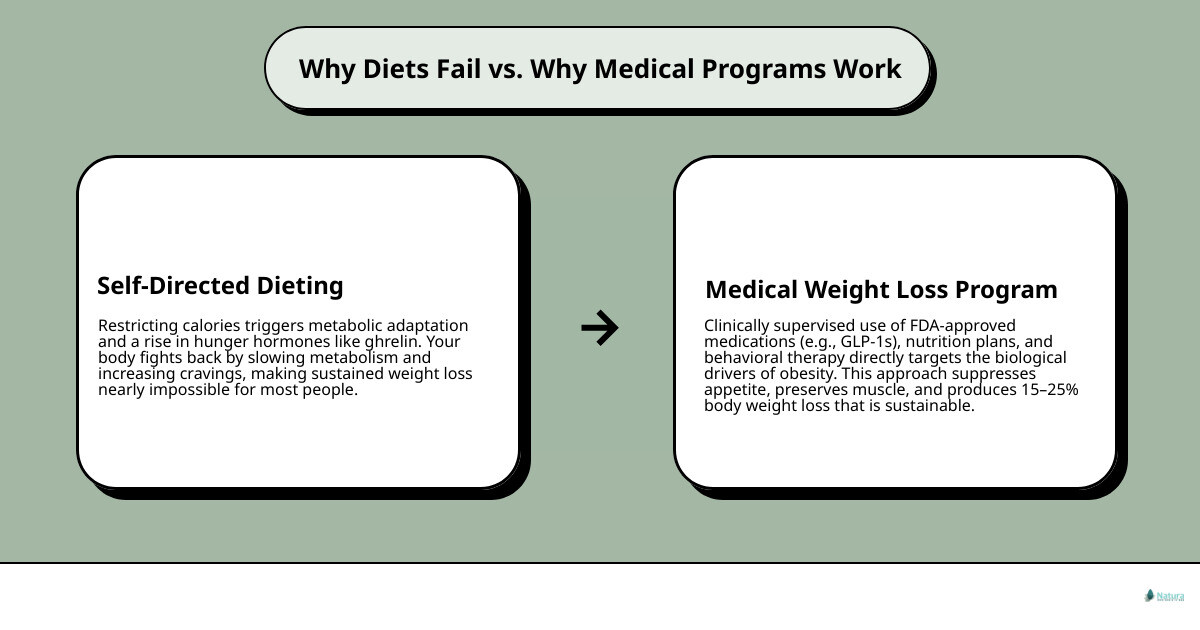
When you eat less, your body fights back. Hunger hormones rise. Metabolism slows. The weight comes back. This is why most diets fail, and why a structured medical approach exists.
What makes medical weight loss different is clinical oversight. A qualified provider monitors your health, adjusts your treatment plan, and uses proven tools — like FDA-approved medications and behavioral therapy — that simply aren’t available at a commercial diet center or through an app.
Losing even 5% to 10% of your body weight can meaningfully improve blood sugar, cholesterol, blood pressure, energy levels, and joint pain. That’s 10 to 20 pounds for someone who weighs 200 pounds — a realistic, achievable target under proper care.
What is a Weight Loss Medical Program?

At its core, a clinically supervised weight loss medical program treats obesity as a chronic, complex medical disease rather than a personal or moral shortcoming. Unlike standard commercial diets that hand you a generic meal plan and send you on your way, More info about medical weight loss reveals that true medical management is a highly coordinated, multi-specialty approach.
This multidisciplinary care model brings together clinical expertise to address the physical, metabolic, and psychological barriers to shedding pounds. In a clinical setting, your care team may include medical doctors, nurse practitioners, physician assistants, registered dietitians, and behavioral health specialists. This ensures that every aspect of your biology is accounted for — from your thyroid function and blood sugar levels to your sleep hygiene and stress patterns.
Medical Supervision vs. Commercial Diets
Have you ever wondered why you can lose 15 pounds on a trendy crash diet, only to watch the scale creep right back up (and then some) a few months later? The culprit is a biological phenomenon known as metabolic adaptation.
When you drastically cut calories on a standard commercial diet, your body interprets this as a period of starvation. In response, it lowers your resting metabolic rate — meaning you burn fewer calories just staying alive. Simultaneously, your brain alters your chemical signals:
- Ghrelin (the hunger hormone) spikes, making you constantly crave food.
- Leptin (the fullness hormone) plummets, meaning it takes much more food for you to feel satisfied.
A medically supervised program uses specialized tools to manage this hormonal hunger. By incorporating clinical appetite suppressants or advanced peptide therapies, we can rebalance your body’s survival mechanisms. This allows you to maintain a caloric deficit comfortably, without the intense, biological drive to overeat. Clinical guidelines for sustainable weight management emphasize that protecting your metabolism is just as crucial as losing the fat itself.
Who is a Candidate for a Weight Loss Medical Program?
Medical weight management is not a one-size-fits-all solution, nor is it designed for someone looking to shed five quick pounds before a beach vacation. Instead, it is a clinical intervention designed for individuals whose weight poses a direct risk to their long-term health.
These obesity-related conditions include:
- Type 2 diabetes or prediabetes
- High blood pressure (hypertension)
- High cholesterol (dyslipidemia)
- Obstructive sleep apnea
- Joint pain or osteoarthritis
- Non-alcoholic fatty liver disease
If you fall into these categories, exploring More info about weight loss services can help you understand how clinical supervision can address both your weight and these underlying health issues simultaneously.
Core Components of a Successful Medical Weight Loss Journey

A successful medical weight loss journey is built on comprehensive health assessments. Before you receive a single prescription or meal recommendation, your medical team will perform extensive diagnostic testing. This typically includes comprehensive blood work to evaluate your metabolic health, hormone levels, kidney and liver function, and nutrient status.
By understanding your unique internal chemistry, we can craft a highly personalized plan. To explore this customized approach further, you can read about A Modern Approach to Medical Weight Loss in Aurora and Cherry Creek CO, which outlines how modern clinics integrate advanced diagnostics with daily support.
Evidence-Based Nutrition and Lifestyle Medicine
Forget standard calorie-counting apps. Medical programs utilize evidence-based lifestyle modifications and highly structured dietary protocols tailored to your metabolic needs. Depending on your health profile, your provider might recommend:
- The Mediterranean Diet Protocol: Focusing on whole foods, healthy fats, and lean proteins to support cardiovascular health. This protocol typically yields a steady, sustainable weight loss of 3 to 5 pounds per month.
- Meal Replacement Protocols: Utilizing clinically formulated shakes and bars to simplify portion control and kickstart weight loss, averaging 6 to 12 pounds per month.
- The Protein Sparing Modified Fast (PSMF): A very low-carbohydrate, high-protein protocol that puts your body into a safe state of ketosis (burning fat for fuel) while preserving your lean muscle tissue. Because this protocol is highly restrictive, it requires monthly blood work and strict clinical monitoring, yielding rapid results of 8 to 15 pounds per month.
These dietary protocols are paired with the five pillars of lifestyle medicine:
By addressing sleep quality and chronic stress, we help lower cortisol levels — a hormone directly linked to stubborn abdominal fat storage.
FDA-Approved Medications and Clinical Innovations
For decades, the options for medical weight management were highly limited. Historically, only about one percent of office-based visits for patients with obesity resulted in a prescription for an anti-obesity medication. This was largely due to a lack of highly effective options and a lingering social stigma. Today, clinical innovations have completely transformed the landscape, offering tools that safely and effectively target the root biological pathways of hunger.
GLP-1 and GIP Receptor Agonists
The most significant breakthrough in obesity medicine is the development of GLP-1 (glucagon-like peptide-1) and GIP (glucose-dependent insulinotropic polypeptide) receptor agonists. These medications mimic natural hormones produced in your gut after you eat. They work by slowing stomach emptying and sending powerful signals to your brain that you are full, effectively silencing the constant “food noise” that many people struggle with.
- Semaglutide: An FDA-approved weekly injection that has helped patients lose an average of 15% to 17% of their starting body weight when paired with lifestyle changes. To see if this option is right for you, Learn more about Semaglutide.
- Tirzepatide: A dual-action GLP-1/GIP receptor agonist. By targeting two hormone pathways instead of one, it has demonstrated even more dramatic results, with patients losing an average of 15% to 25% of their total body weight. To understand the science behind this dual-hormone approach, Learn more about Tirzepatide.
Sequential Pharmacotherapy and Muscle Preservation
While these new medications are incredibly effective, they come with a clinical challenge: rapid weight loss can sometimes result in the loss of lean muscle mass alongside fat. Preserving muscle is critical because muscle tissue is the primary driver of your resting metabolism.
To solve this, leading-edge protocols are exploring sequential pharmacotherapy — a strategy where patients utilize highly effective injectable medications to achieve their initial weight loss, and then transition to lower-cost oral medications to maintain their new weight long-term.
This approach is currently being evaluated in major clinical trials, such as the STAY-LEAN Trial on Sequential Anti-Obesity Medication, which focuses on long-term weight maintenance and muscle preservation.
To combat fatigue and protect your lean tissue during active weight loss, we also utilize specialized supportive therapies:
- GLP Ease IV: Designed specifically to alleviate common side effects of GLP-1 therapies, such as mild nausea or dehydration. You can read about GLP Ease IV therapy to see how it supports your comfort.
- B Lean IV: A targeted blend of lipotropics and B-vitamins formulated to naturally boost energy levels and support your metabolism. Learn more about B Lean IV therapy and how it fits into an active lifestyle.
Why Choose a Non-Surgical Medical Weight Loss Program
For individuals struggling with severe obesity, bariatric surgery (such as gastric sleeve or bypass) is a well-known option. However, surgical interventions are highly invasive, carry surgical risks, and require permanent alterations to your digestive tract.
Furthermore, bariatric programs often require a strict, six-month supervised weight loss attempt and extensive psychological evaluations before you can even step into an operating room.
A non-surgical weight loss medical program offers a highly effective, non-invasive alternative that meets you where you are today.
| Feature | Non-Surgical Medical Weight Loss | Bariatric Surgery |
|---|---|---|
| Invasiveness | Non-invasive (medications, lifestyle, IVs) | Invasive surgical procedure |
| Recovery Time | None | 2 to 4 weeks |
| Average Weight Loss | 15% to 25% (with modern GLP-1s) | 25% to 35% |
| Reversibility | Fully reversible / adjustable | Permanent anatomical changes |
| Key Advantage | Personalized, flexible clinical support | Rapid initial physical restriction |
To help your body adapt and recover as you shed weight, utilizing supportive IV Services for recovery and wellness can maintain your hydration, support muscle recovery, and keep your energy high without surgical downtime.
How to Choose a Safe and Effective Weight Loss Medical Program
With the massive popularity of weight loss medications, many online platforms and unqualified clinics have popped up offering quick prescriptions. To protect your health, you must know what to look for in a safe, legitimate program.
Warning Signs of Programs to Avoid:
- Promises of rapid, extreme weight loss (e.g., “lose 30 pounds in 30 days”).
- Claims that you can achieve permanent results without making any lifestyle or dietary changes.
- Programs that offer medications without requiring comprehensive blood work, medical history reviews, or regular face-to-face check-ins.
- Hidden fees and lack of cost transparency.
A safe, successful program should always feature a structured journey (typically lasting at least 5 to 6 months to establish permanent habits) and be led by licensed, credentialed medical professionals who prioritize your long-term health over quick fixes.
Key Questions to Ask Your Provider
Before committing to any program, schedule a consultation and ask these critical questions:
- What are the medical credentials of the staff supervising my care? (Ensure you are working with licensed MDs, DOs, NPs, or PAs).
- How will you monitor my health and manage potential side effects?
- What is your plan for helping me maintain my weight loss once I stop taking medication?
- Are there flexible payment options or programs available?
To help make your wellness journey accessible, ask about Financing options that can break your treatment into manageable monthly payments. Additionally, exploring Membership benefits can provide you with ongoing discounts and bundled services to support your long-term maintenance phase.
Frequently Asked Questions
To help you make an informed decision, we have compiled the most common questions our clinical team receives. You can also explore our comprehensive FAQs page for more detailed information about our wellness therapies.
How much weight can I expect to lose?
While individual results vary based on your starting weight and metabolic health, patients using modern GLP-1 medications typically lose between 15% and 25% of their starting body weight over a 12-month period. Losing just 5% to 10% of your total weight is already enough to produce dramatic, life-changing improvements in your internal health markers.
Does insurance cover medical weight loss?
Insurance coverage for weight loss medications and doctor visits varies widely depending on your specific employer plan and state. Many commercial insurance policies do not cover weight-loss medications, while others do if you have documented co-morbidities like type 2 diabetes.
The good news is that most medical weight loss services, lab work, and doctor consultations are fully eligible for Flexible Spending Account (FSA) and Health Savings Account (HSA) reimbursement.
How do I get started with a program?
Getting started is simple. While some hospital-based programs require a formal referral from a primary care doctor, wellness-focused medical spas allow you to book a direct consultation.
If you live in the Denver metro area, you can easily Contact us to schedule your initial medical assessment and sit down with a licensed provider to build your custom plan.
Conclusion
Finding a weight loss medical program that actually works means choosing a path that respects your body’s complex biology. By combining breakthrough FDA-approved medications with personalized lifestyle medicine, behavioral support, and targeted nutrient therapies, you can finally break the cycle of chronic dieting and enjoy sustainable, life-changing results.
At Natura Med Spa & IV Bar, we are proud to serve our local communities in Aurora, Denver, and Cherry Creek, CO. We believe in providing convenient, results-driven beauty and wellness treatments in a warm, welcoming environment. To support those who serve, we are honored to offer dedicated military discounts across our entire range of medical services.
Ready to take the first step toward a healthier, more vibrant you? Check out our latest Specials to explore our current medical weight loss and wellness offers. And as you hit your wellness milestones, don’t forget to treat yourself — you can Schedule a HydraFacial to celebrate your wellness journey and keep your skin glowing as beautifully as you feel on the inside!